 CARDZ3N — Home
Contact us today for personalized advice and strategic solutions tailored to your goals.

Call us
+1 (702)-623-3528


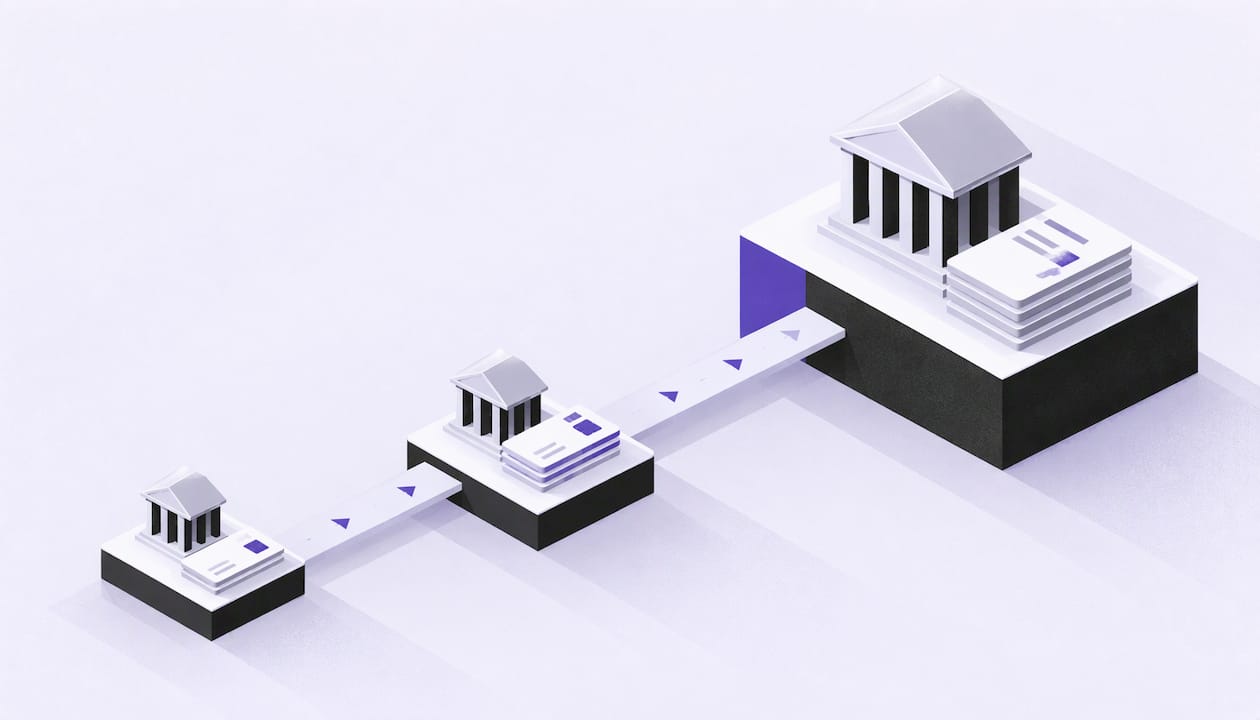




The Same Day ACH network limit is $1,000,000 per payment. Nacha has approved an increase to $10,000,000 per payment, effective September 17, 2027. The limit applies to a single item, so a payment above it is not rejected. It settles on the next business day instead. Your own bank or processor can also set a lower ceiling than the network does, and for most businesses that lower ceiling is the number that matters.
This guide covers the network limit, the exceptions to it, the bank-level caps that cause most surprises, the cutoffs that decide whether a payment is really same day, and what to confirm with your financial institution before you move high-value volume.
The Federal Reserve’s Same Day ACH FAQ states that the value limit is $1,000,000 per single item, and no single item above that amount is eligible for same-day settlement. The limit is per entry, not per file and not per day. A file can carry many items that each fall under the cap, and each one settles the same day.
What happens when one item in a batch is over the limit is worth knowing. According to the same FAQ, all items in the batch are processed. The over-limit item receives the next business day’s settlement date, while the remaining items receive same-day settlement. One large payment therefore does not hold up the rest of your file. It does arrive a day later than you may have planned.
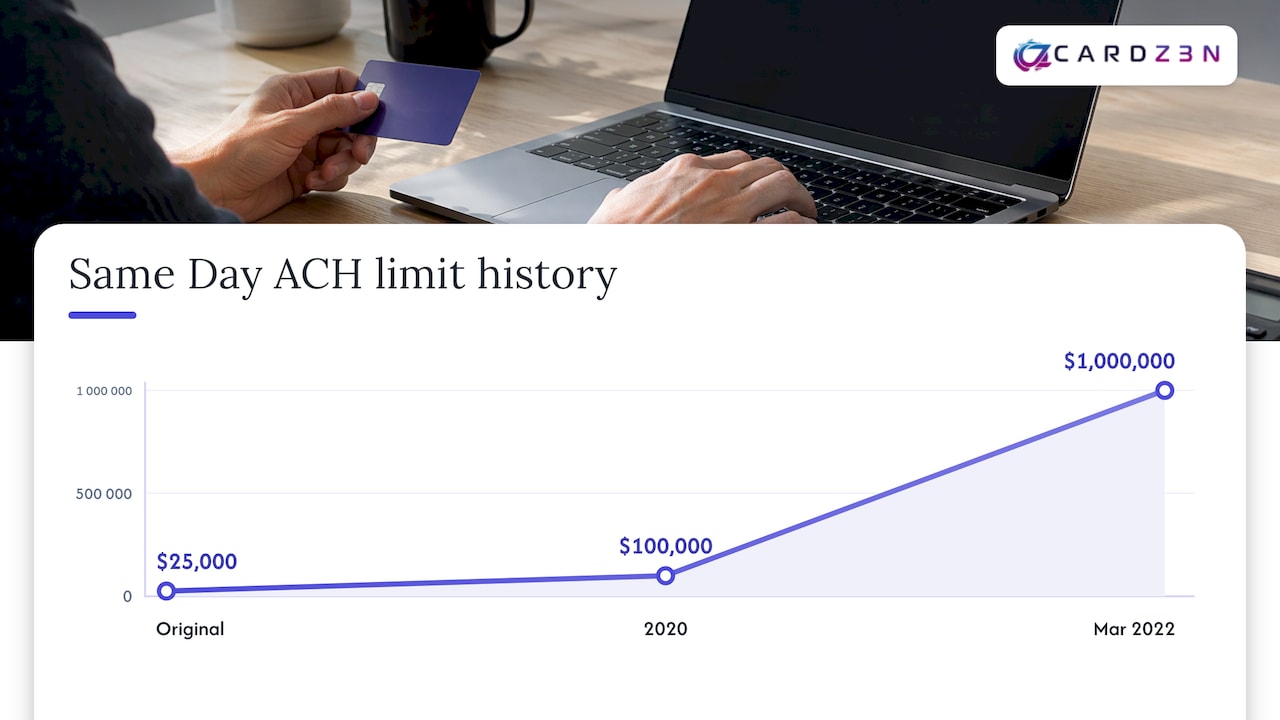
The limit has grown in steps. Nacha’s announcement describes the original maximum as $25,000, raised to $100,000 in 2020 and then to $1 million in March 2022. The coming increase is the third in the service’s history.
Nacha’s rule page confirms that the approved amendment takes effect on September 17, 2027, raising the per-entry limit from $1 million to $10 million. Per the same page, the higher limit applies to:
International ACH transactions (IATs) remain ineligible for Same Day ACH, and that does not change.
Nacha expects the larger cap to support use cases such as invoice and tax payments, insurance claim payments, payroll funding, merchant settlement and cash concentration, according to its announcement. For a B2B company, the practical meaning is that large supplier payments, tax remittances and treasury sweeps that previously had to go by wire can eventually move by ACH with same-day settlement.
Until that date, plan around $1 million. Nacha publishes its rules by effective date on its New Rules page, which is the place to confirm timing as the date approaches.
The network limit is a ceiling for the whole ACH system. It is not a guarantee that your account can send that much. Axis Intelligence summarizes it this way: any lower number a customer encounters is set by that customer’s own bank. Banks and processors set limits for risk management, and they commonly vary by customer, by product and by credit or debit direction.
One documented example comes from a core banking vendor. Jack Henry’s knowledge base explains that its Treasury Management platform lets each financial institution control the same-day transaction limit, up to the $1 million Nacha maximum, and that the setting defaults to $100,000 when activated. A business customer at an institution using that setup could therefore have a same-day cap well under $1 million without any mistake on its side.
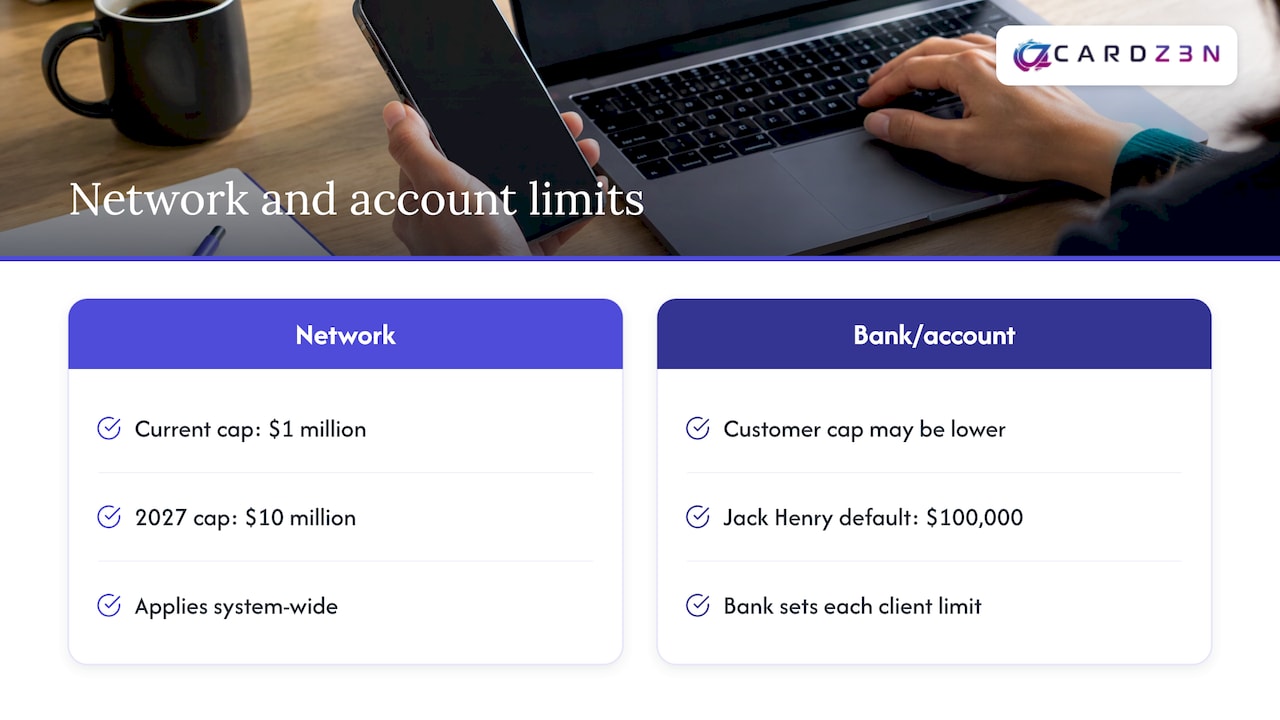
The same logic will apply after 2027. When the network ceiling moves to $10 million, each institution still decides how much of it to expose to each client. Expect the increase to reach your account only after your bank or processor reconfigures its own limits and, for many businesses, after a fresh review of your volume and risk profile.
| Limit type | Who sets it | What it controls |
|---|---|---|
| Network per-item limit | Nacha rules | $1,000,000 per item today; $10,000,000 from September 17, 2027 |
| Institution or processor limit | Your bank or payment provider | Per-item, per-file or per-day caps on your account, which can be lower than the network cap |
| Check-conversion item limit | Same Day ACH rules | $2,500 for RCK and XCK entries |
| IAT exclusion | Nacha rules | International ACH transactions are not eligible for same day |
Per Nacha’s expansion rule, eligible items include credits, debits and all returns. The exceptions are IATs and forward transactions over the per-item dollar limit. So a same-day debit to collect a B2B invoice is as eligible as a same-day credit to pay a vendor.
Two details trip people up:
A payment under the limit still settles next business day if it misses the final window. Nacha’s expansion created a third processing window, with a network submission deadline of 4:45 p.m. ET, extending the earlier last submission time of 2:45 p.m. ET. Interbank settlement for that window happens at 6:00 p.m. ET. Credits received in it must be made available no later than the end of the receiving bank’s processing day.
Those are network deadlines. Your bank or processor will set an earlier internal cutoff, because it needs time to validate and transmit your file. If your file leaves your system at 4:30 p.m. ET, assume it is late. For the full schedule, see our guide to ACH cutoff times and FedACH windows.
Settlement and availability are different events. Nacha’s local-time guidance sets these rules for credits:
If your vendors are on the West Coast, a payment sent in the late window still lands the same day in settlement terms, but your counterparty’s availability follows their local clock. Set expectations with them accordingly.
The rules include a Same Day Entry Fee of 5.2 cents per transaction, a cost-recovery mechanism for receiving banks that must support same-day receipt. That is the network-level fee. What you pay as a business depends on your bank or processor, which may add its own per-item pricing. Pricing for processing is quote-based at CARDZ3N, and we walk merchants through it before they commit.
For a $900,000 vendor payment, a few cents per item is negligible next to a wire fee. For a high-count file of small debits, the per-item fee adds up, so only flag items as same day when the speed justifies it.
Until the $10 million cap arrives, anything above $1 million has two realistic paths: split it across items (where your agreements and your bank’s risk policies allow), or send it by wire. Splitting is not always appropriate, and your institution may have rules about structuring large payments, so confirm before you do it. We cover the trade-offs in ACH versus wire transfer for B2B payments.
When your problem is liquidity rather than rails, for example you need working capital while a large receivable settles, a different channel may fit better. Comparing online lenders versus banks for small business funding shows how much the speed of access differs, and it is a useful frame for deciding whether same-day settlement alone solves your cash timing.
The research behind this article did not turn up a single authoritative checklist for high-value ACH senders, so this one reflects how we approach onboarding. Put these questions to your bank or processor in writing:
The last question matters most for merchants processing debits, because collecting money is where return and dispute risk sits. Our overview of Nacha compliance and risk management explains what rule obligations apply to originators.
We see the same pattern in nearly every conversation about ACH limits: the business reads that the network allows $1 million, and then discovers that its own account is capped far lower, or that its processor holds funds against debit volume. The headline number is not the number that governs your cash flow.
That is why we treat limits, reserves and pricing as things to put on the table at the start. We build merchant and ACH programs for businesses that mainstream providers decline or restrict, and we are transparent about reserve structures and quote-based pricing so a high-volume merchant can plan around real terms rather than discover them after boarding.
Our advice for B2B and B2G merchants is to design the payment flow around the limit you will actually have, with multiple bank and rail options behind it, and to revisit it when Nacha’s $10 million cap arrives in 2027. A specialist underwriting team can often structure higher ceilings when the volume profile, documentation and return history support it.
Joshua Benedetti
We provide ACH and eCheck processing, virtual terminal access, Level 2 and Level 3 data processing and B2B and B2G payment programs, backed by sponsor banks and hands-on underwriting. If your current provider has capped your same-day volume, frozen your account or declined you outright, review our B2B and B2G payment processing options or our ACH and eCheck processing page. For slower, lower-cost batches, see 1-3 day ACH processing for B2B.
The network maximum is $1,000,000 per item today, per the Federal Reserve. It rises to $10 million per payment on September 17, 2027. Your bank or processor may set a lower limit on your account.
The item is not rejected at the network level. It receives the next business day’s settlement date, while other items in the same batch settle the same day. Your own bank may handle over-limit files differently, so confirm its policy.
Yes. Nacha states that the increase applies to both credits and debits, to consumer and business payments, and to all three Same Day ACH windows. International ACH transactions stay ineligible.
Yes. Same-day items with SEC code RCK or XCK carry a $2,500 limit. IATs are not eligible for Same Day ACH at all.
The network’s third window accepts files until 4:45 p.m. ET, with interbank settlement at 6:00 p.m. ET. Your bank or processor sets an earlier cutoff, so check it in Eastern Time.
Every merchant's processing setup is different, so the right answer depends on your industry, sales channels, average ticket size and chargeback history. CARDZ3N's payments specialists review those details with you and match your business with the right sponsor bank, gateway and risk tools, whether you sell online, in store, by invoice or on a recurring subscription.
We work with merchants across the USA, Canada, the UK and the EU, including high-risk, B2B and fast-growing businesses that traditional processors often turn away. If you would like a second opinion on your current rates, contract terms or approval options, contact our team for a free, no-obligation processing review.
Joshua Benedetti is the CEO of CARDZ3N, a Las Vegas-based merchant services provider specializing in high-risk payment processing and B2B payment technology.
Joshua Benedetti on LinkedInCARDZ3N Inc is headquartered in Las Vegas, Nevada, and provides merchant services to businesses that traditional processors turn away. Backed by top-tier sponsor banks and processors, CARDZ3N combines institutional stability with the speed of a specialized team that understands high-risk industries. Services include high-risk account underwriting and placement, gateway solutions across the major gateway platforms, POS integrations, ACH and check processing, chargeback prevention through ChargebackZ3N, and business lending and working capital. Its AerospacePay division serves OEMs, MROs, FBOs, and repair stations with B2B and B2G payment processing. CARDZ3N serves merchants in the USA, Canada, the UK, and the EU.
Start protecting your revenue from chargebacks today — schedule your complimentary consultation with CARDZ3N’s dispute management specialists.