 CARDZ3N — Home
Contact us today for personalized advice and strategic solutions tailored to your goals.

Call us
+1 (702)-623-3528






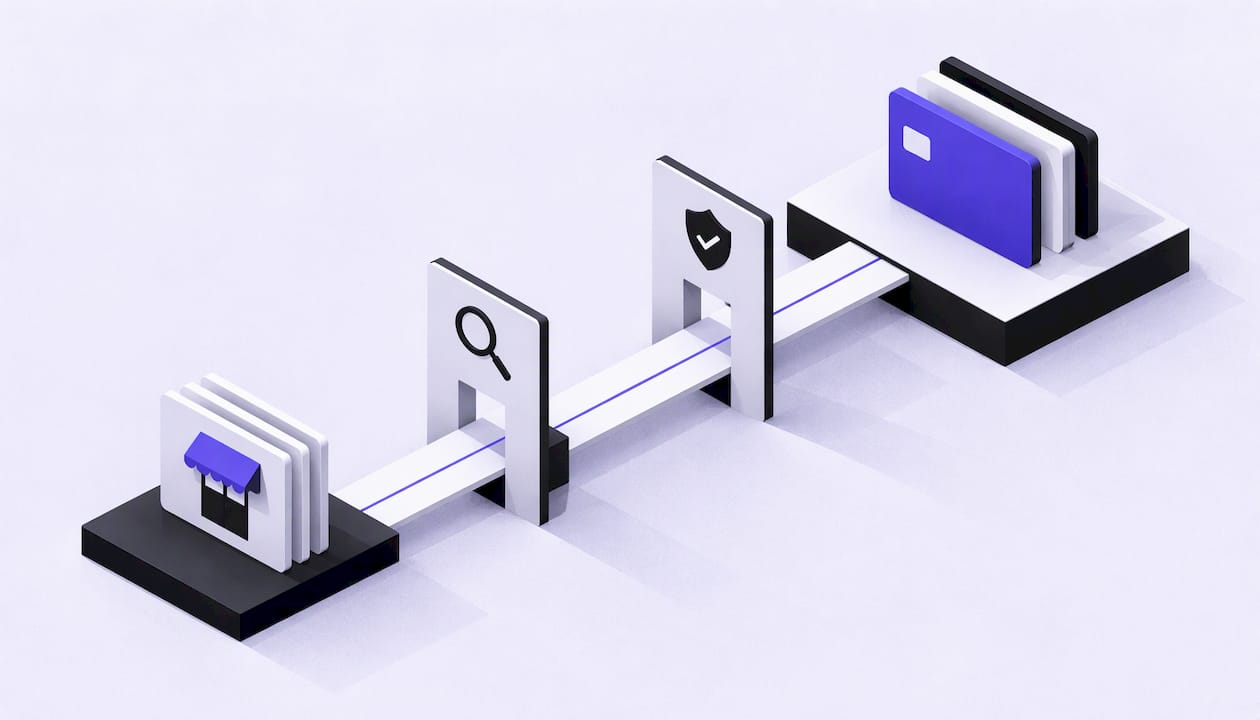





To qualify for a high-risk merchant account in the U.S., you need to show an acquiring bank three things: that your business is legitimate and lawful, that your finances can absorb chargebacks and refunds, and that your processing history and controls keep disputes low. The paperwork is the visible part. The real requirement is a complete risk story that an underwriter can approve without having to guess. That is why high-risk merchants get approved fastest when a specialist who knows the sponsor banks packages the file before it is submitted. At CARDZ3N, high-risk merchant account placement is built around exactly that underwriting step.
This guide covers what underwriters look for, the documents they request, how a high-risk account differs from a standard one, what slows approvals down, and how requirements change if you also sell in Canada, the UK or the EU.
A merchant account is an agreement under which an acquiring bank settles your card payments. The bank carries the loss if you cannot cover a chargeback, so it underwrites you the way a lender underwrites a borrower. The FDIC’s examination guidance for credit card activities says acquirers should scrutinize prospective merchants with the same diligence used for borrowers, weighing the ability to cover projected chargebacks, fraud risk, high chargeback rates and the chance the business fails.
The same guidance names the profiles that tend to carry elevated chargeback exposure: card-not-present sellers, mail-order and telemarketing merchants, adult entertainment, and businesses that deliver goods or services in the future, such as health club memberships and travel clubs. Card networks also publish broader high-risk category definitions.
In practice, underwriters sort risk into five buckets:
No single bucket decides the outcome. A strong file in one area can offset a weaker one in another, which is why presentation matters as much as the facts.
Every acquirer has its own checklist, but a high-risk file typically draws from the same pool. Having these ready before you apply removes the most common cause of back-and-forth.
If you want a printable version, our high-risk merchant account application checklist lays out the documents and underwriting steps in order.
Underwriters read documents for consistency. They are not hunting for a perfect business, they are hunting for contradictions. Here is what draws their attention.
The FDIC guidance notes that acquirers set volume limits for high-risk merchants relative to the bank’s total merchant portfolio. If your projected monthly volume is far above what your site traffic, inventory or history supports, the underwriter will either cut the limit or ask for more evidence. Realistic projections that tie to your marketing spend and conversion rates are more persuasive than ambitious ones.
The chargeback ratio is the share of transactions that end in a dispute. Card networks monitor merchants and acquirers against ratio thresholds, and those programs have tightened in recent years, so an underwriter wants to see headroom, not a ratio sitting just under a line. Friendly fraud, where a cardholder disputes a purchase they actually made, is a major driver for subscription and digital merchants. Clear descriptors, easy cancellation and prompt refunds reduce it before any dispute is filed.
Underwriters check that what the website says matches the application. A mismatch between the MCC you declared, the products on your site and the flow of funds in your statements is the quickest route to a decline. Multi-level marketing, free-trial offers and bundled subscriptions get extra attention on marketing language and cancellation terms, since the FDIC guidance points to underwriting emphasis on products and marketing for high-risk merchants.
Expect personal credit and background checks on principals. A thin or imperfect credit profile is not an automatic disqualifier in high-risk underwriting, but it often shifts the terms toward a larger reserve or a lower initial limit. A prior termination is also workable when you can explain what caused it and what you changed.
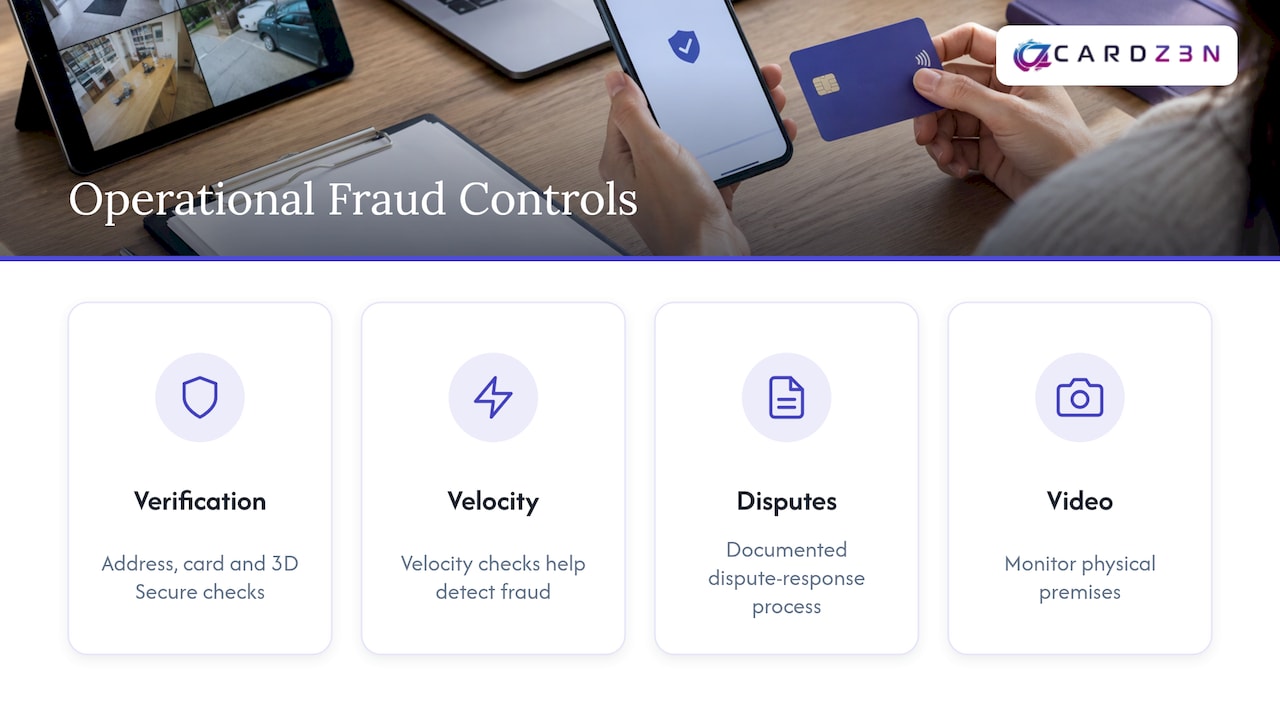
Banks like to see fraud tools in place: address and card verification, 3D Secure authentication, velocity checks and a documented dispute-response process. For merchants with physical premises, on-site controls also count. Video monitoring, for example, is part of layered fraud controls for retail and in-person sales, and it supports the picture of a well-run operation.
The differences are not cosmetic. The FDIC manual describes the approach banks take with high-risk merchants: increased underwriting emphasis on products and marketing, volume limits, reserves sized to credit risk, pricing that reflects chargeback risk and monitoring costs, and heightened monitoring with lower chargeback thresholds for remedial action. Translated into what you will see on your agreement:
| Factor | Standard merchant account | High-risk merchant account |
|---|---|---|
| Underwriting | Light review, often automated | Manual review of business model, marketing and financials |
| Documentation | Basic identity and bank details | Full financial, processing history and compliance file |
| Reserve | Rare | Common, sized to your credit risk |
| Pricing | Standardized, published tiers | Quote-based, reflecting chargeback exposure |
| Processing limits | Flexible | Set against projected volume and the bank’s portfolio |
| Monitoring | Periodic | Closer, with tighter chargeback thresholds |
| Contract terms | Month to month in many cases | Can include longer terms and early termination fees |
A reserve is money the acquirer holds back as a cushion against chargebacks. It can be structured as a percentage of each transaction held for a rolling period, a fixed upfront deposit, or a capped amount. The structure matters more than the label, so ask for it in writing: percentage, holding period, cap and release conditions. CARDZ3N is transparent about reserve structures and quote-based pricing, so you see how your reserve works before you sign.
There is no universal timeline, and a figure quoted without context is not reliable. Time to approval depends on how complete the file is, how many follow-up questions the underwriter has, and how the category is regulated. Applications with a full document set and a consistent website move quickest. These are the usual delays:
After approval, there is still integration time: connecting the gateway, testing transactions and configuring recurring billing. Planning that work in parallel with underwriting shortens the path to your first live sale.
The core file is similar across categories. The extras differ.
The underwriting logic is the same: identity, financial strength, history and compliance. What changes is the local paperwork, the regulatory regime and the banks available to you. CARDZ3N serves merchants in the USA, Canada, the UK and the EU. If you sell in Canada, start with our Canadian high-risk merchant services page, and for the UK see our UK application checklist. If a bank in another country will hold your account, the same disciplines apply: complete documents, consistent business description and a controlled dispute ratio.
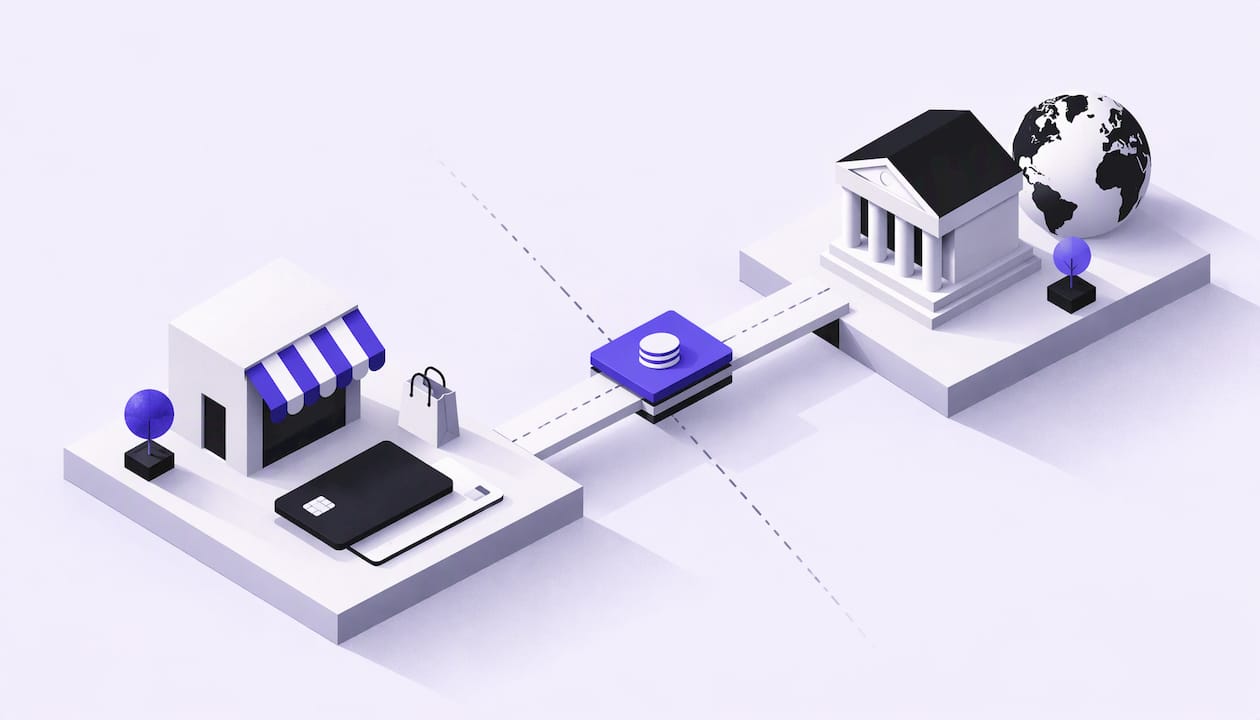
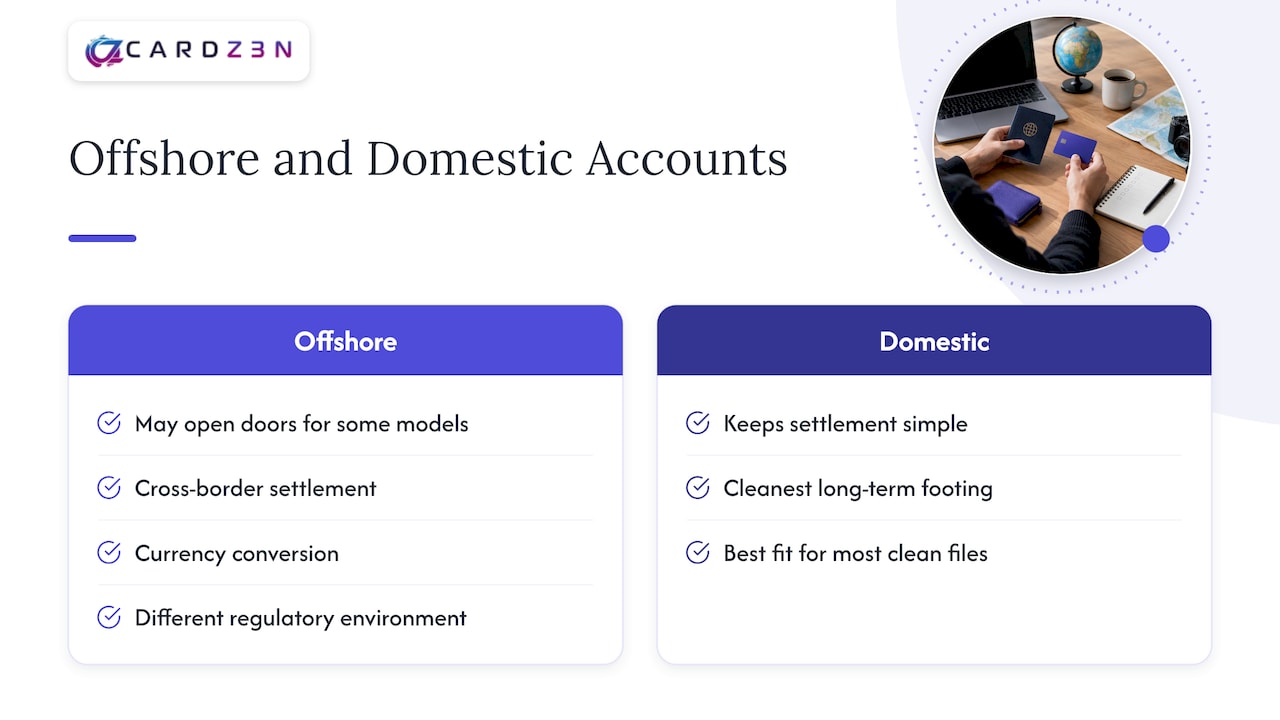
An offshore account is one held with a bank outside your country. Merchants consider them when domestic banks decline a category. They can open doors for some models, but they bring cross-border settlement, currency conversion and a different regulatory environment, and your U.S. tax and reporting duties continue to apply. We review offshore options together with domestic ones, so you compare like with like. For most U.S. merchants with a clean file, a domestic or multi-bank placement keeps settlement simple and gives the cleanest long-term footing.
When you compare high-risk providers, judge them on what happens to your file and your money:
Our guide on choosing a high-risk merchant account provider walks through each point. CARDZ3N is a specialist built for high-risk and B2B merchants that generic processors turn away, with multi-bank and multi-rail approval resilience.
If a mainstream processor has rejected, frozen or closed your account, the next application is the one that has to be right. CARDZ3N provides underwriting and merchant account placement, gateway integrations, ACH and eCheck processing, POS integrations, chargeback prevention through ChargebackZ3N, and business lending and working capital for high-risk merchants. Pricing is quote-based, and we are transparent about reserves. Start with our high-risk merchant account page to share your business details and get a quote.
Most declines we would call avoidable are not about the industry. They come from a file that tells two different stories: a website that says one thing, an application that says another, and statements that say a third.
Our approach is to treat underwriting as a preparation job. We align the MCC, the site, the financial documents and the volume projections before a bank sees them, then match the file to a sponsor bank that actually serves the category. That is the reason we operate as a specialist and not a generalist.
We also believe you should know your terms. Reserve structures and pricing should be explained in plain language, because a merchant who understands the reserve plans cash flow better and stays in good standing longer.
The strongest accounts are built on prevention. Clear descriptors, easy cancellation, fast refunds and a disciplined dispute process keep ratios low, and low ratios keep your account stable and your options open.
Joshua Benedetti
You need a legal business entity with an EIN, government ID for the owners, a business bank account, a live website with clear policies, and processing or financial documentation that shows you can cover refunds and chargebacks. Many acquirers also ask for a personal guarantee. Regulated categories add licensing documents.
Yes, in many cases. Underwriters want a clear explanation of what caused the termination and what you changed, such as clearer billing descriptors, better cancellation flows or stronger fraud screening. Placement with a bank that serves your category matters more than the prior closure alone.
Reserves are common in high-risk accounts. The FDIC manual describes reserves sized to a merchant’s credit risk, so the amount depends on your profile, volume and chargeback history. Ask for the percentage, holding period, cap and release conditions in writing before you sign.
The underwriting principles are the same, covering identity, finances, processing history and compliance. The local documents, regulators and available banks differ. CARDZ3N serves merchants in the USA, Canada, the UK and the EU, so you can plan across markets.
Every merchant's processing setup is different, so the right answer depends on your industry, sales channels, average ticket size and chargeback history. CARDZ3N's payments specialists review those details with you and match your business with the right sponsor bank, gateway and risk tools, whether you sell online, in store, by invoice or on a recurring subscription.
We work with merchants across the USA, Canada, the UK and the EU, including high-risk, B2B and fast-growing businesses that traditional processors often turn away. If you would like a second opinion on your current rates, contract terms or approval options, contact our team for a free, no-obligation processing review.
Joshua Benedetti is the CEO of CARDZ3N, a Las Vegas-based merchant services provider specializing in high-risk payment processing and B2B payment technology.
Joshua Benedetti on LinkedInCARDZ3N Inc is headquartered in Las Vegas, Nevada, and provides merchant services to businesses that traditional processors turn away. Backed by top-tier sponsor banks and processors, CARDZ3N combines institutional stability with the speed of a specialized team that understands high-risk industries. Services include high-risk account underwriting and placement, gateway solutions across the major gateway platforms, POS integrations, ACH and check processing, chargeback prevention through ChargebackZ3N, and business lending and working capital. Its AerospacePay division serves OEMs, MROs, FBOs, and repair stations with B2B and B2G payment processing. CARDZ3N serves merchants in the USA, Canada, the UK, and the EU.
Start protecting your revenue from chargebacks today — schedule your complimentary consultation with CARDZ3N’s dispute management specialists.