
 CARDZ3N — Home
Contact us today for personalized advice and strategic solutions tailored to your goals.

Call us
+1 (702)-623-3528










Yes, ACH debits can be disputed. Unauthorized, duplicate, or incorrect transfers qualify for reversal through Regulation E protections, written statements of unauthorized debit, and NACHA return codes. Outcomes hinge on timing: consumers who report quickly limit their liability, and merchants who keep solid proof of authorization limit theirs.
An ACH return happens when a receiving bank sends a debit back to the originator through the ACH network, using a standardized reason code. A credit card chargeback, by contrast, runs through card network rules (Visa, Mastercard) and often routes through arbitration committees rather than bank-to-bank warranty claims. ACH disputes frequently resolve through warranty claims between the Receiving Depository Financial Institution (RDFI) and the Originating Depository Financial Institution (ODFI), since NACHA operating rules assign responsibility for verifying authorization to the originator’s bank.
Common ACH return codes that signal a dispute include:
Because these return codes trigger a warranty claim process rather than a simple refund, merchants often have a window to contest the return before it becomes final.
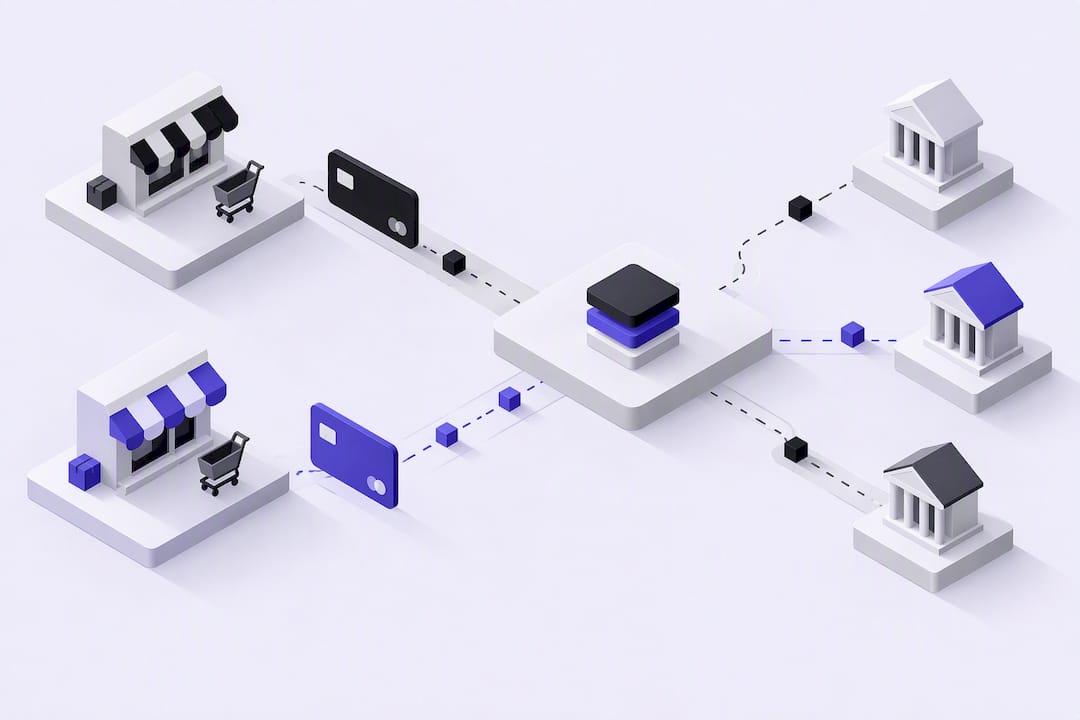
Three parties typically touch an ACH dispute. The Originator (the merchant or biller) initiates the debit. The ODFI (the originator’s bank) transmits the entry and stands behind its warranty under NACHA rules. The RDFI (the consumer’s or business’s bank) receives the debit, processes the customer’s claim, and initiates the return if the claim is valid.
For consumer accounts, Regulation E sets federal protections that sit above NACHA’s private network rules:
Regulation E’s liability tiers show how much timing matters: a consumer who reports within two business days owes at most $50, while delayed reporting can expose them to $500 or more, according to 12 CFR 1005.6. Business and non-consumer accounts do not receive Regulation E coverage; those disputes run entirely on NACHA operating rules and the terms set in the originator’s agreement with its bank.
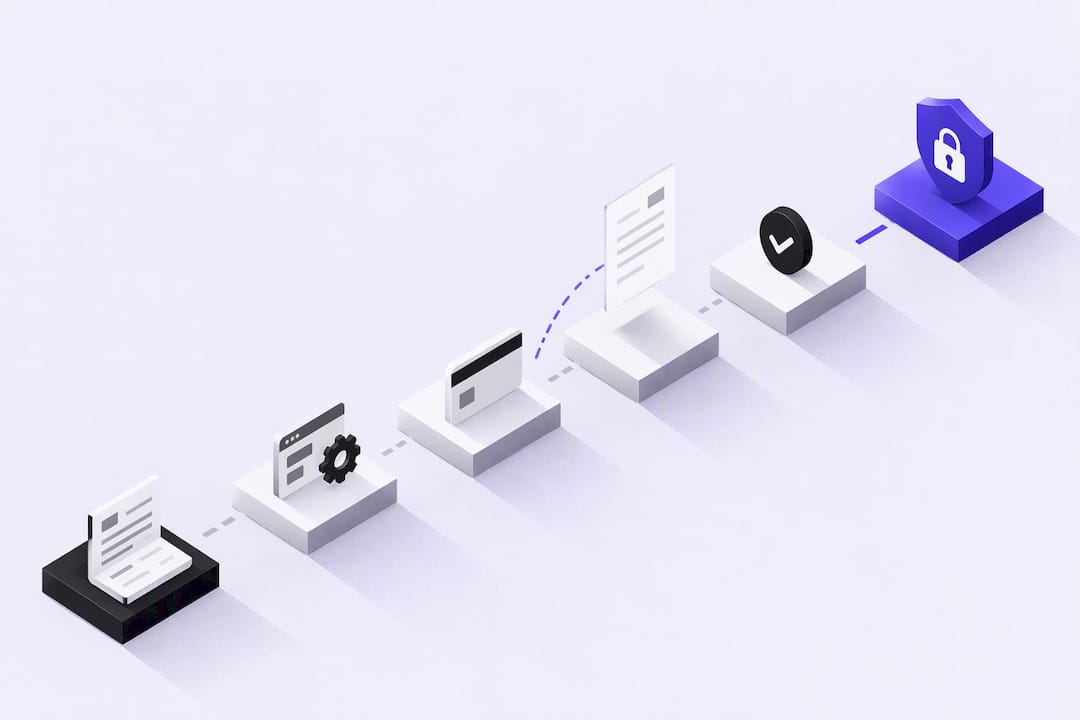
Consumers who spot an unfamiliar or incorrect ACH debit have a narrow but workable window to act. Following these steps in order preserves the strongest legal position.
Pro Tip: Report suspected unauthorized debits within two business days whenever possible. That single step is the difference between a $50 liability cap and a $500 one under Regulation E.
When a customer files a dispute, the financial impact lands on the merchant’s cash flow before the facts are even settled. Provisional credits issued to consumers during an investigation are typically pulled from the merchant’s account or future payouts, not held in limbo. If the RDFI’s investigation confirms the claim, that provisional reversal becomes permanent; if the merchant successfully contests it with proof of authorization, funds can be restored.
Beyond the returned amount itself, merchants often face:
Daily reconciliation catches these deductions before they compound. Merchants who respond quickly to ODFI requests for proof, and who keep authorization records organized and retrievable, consistently fare better when a return is contested. Tracking ACH cutoff times also helps merchants anticipate when a same-day ACH payroll correction is still possible versus when a transaction has already settled.
NACHA’s operating rules set specific windows and thresholds that determine how long a warranty claim can be filed and how much return activity a merchant can sustain before facing enforcement.
NACHA’s 0.5% unauthorized return rate threshold means that even a modest spike in unauthorized-debit returns can trigger an inquiry, according to NACHA. Originators who exceed it enter a formal review process that can include unauthorized-entry fees and, for repeat issues, loss of origination privileges. New fraud-monitoring requirements for non-consumer originators and third-party senders add another layer merchants need to track, since failing to monitor transaction patterns makes it easier to drift over the threshold without noticing.
NACHA has acknowledged that RDFIs vary widely in how they review Written Statements of Unauthorized Debit: some reverse automatically, others scrutinize claims for first-party fraud before processing a return, according to NACHA’s own research. That inconsistency means a merchant’s paper trail often decides the outcome more than the merits of the original transaction.
A defensible authorization file includes a signed electronic ACH authorization, IP address and device logs captured at the moment of consent, a clear and recognizable Company Entry Description, transactional receipts, and archived customer communications. Merchants who pair this with internal transaction-monitoring thresholds catch unusual spikes before they become a NACHA inquiry. High-risk verticals, where return rates run naturally higher, benefit from underwriting and dispute support built around these realities rather than generic risk models.
Pro Tip: Standardize your Company Entry Description across every transaction type. A vague or inconsistent descriptor is one of the most common reasons customers file a dispute they’d otherwise recognize as legitimate.
— Joshua Benedetti
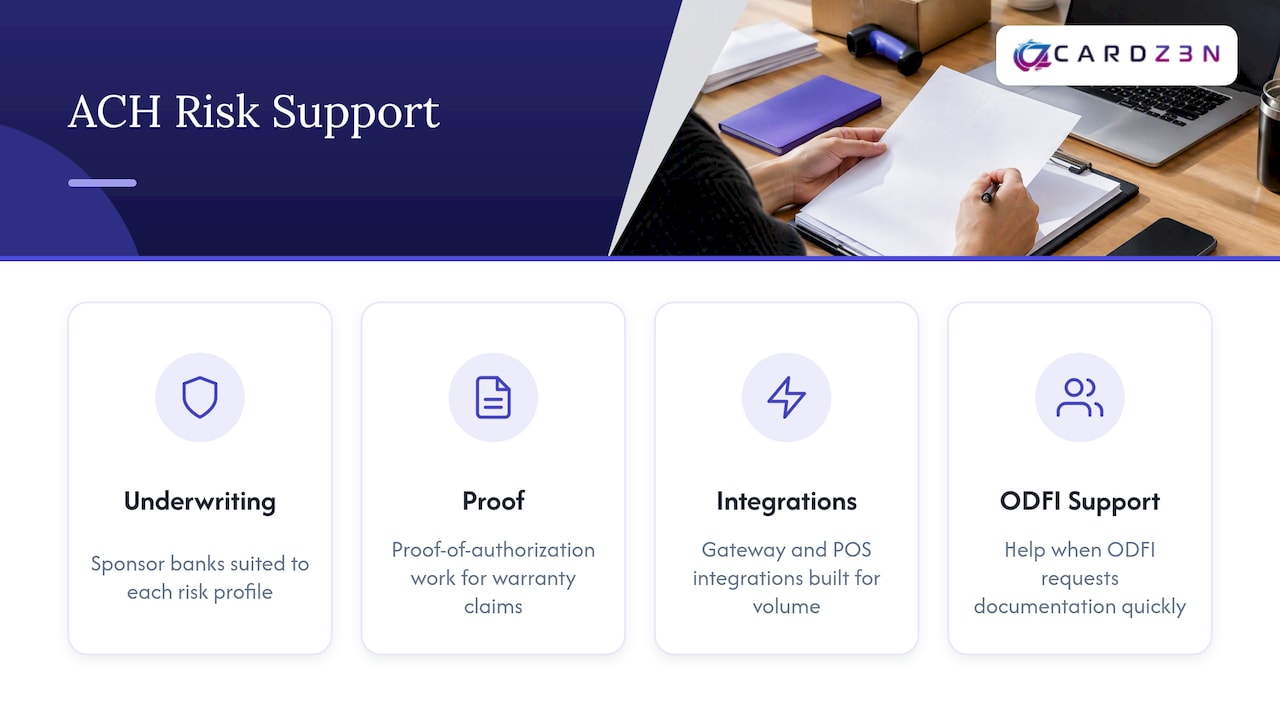
Our ACH and eCheck processing is designed for the operational realities high-risk merchants face: elevated return rates, stricter NACHA scrutiny, and processors that freeze accounts at the first sign of volatility. An underwriting team places merchants with sponsor banks suited to their risk profile instead of forcing a one-size-fits-all approval process, and the chargeback management and dispute representment service handles the proof-of-authorization work that determines whether a warranty claim succeeds.
Merchants in subscription billing, nutraceuticals, CBD, and other categories commonly considered high-risk get gateway and POS integrations built for their volume, plus the support needed when an ODFI requests documentation quickly. If your ACH return rate is climbing or your current processor has gone quiet on reserve terms, consider requesting a consultation on a high-risk merchant account page to see what a transparent setup looks like.
This article is general information, not a substitute for advice from a qualified financial advisor. Consult a qualified financial professional about your own circumstances before acting on anything here.
A credit card chargeback is a forced reversal of a card payment, initiated through the card network’s dispute process rather than the ACH network. It differs from an ACH return because it follows card network rules and reason codes instead of NACHA’s return-code system.
Standard ACH transfers are built for domestic U.S. transactions and are not designed for direct international transfers. Cross-border payments typically route through wire transfers or other international payment rails instead of the ACH network.
ACH, or Automated Clearing House, is the electronic network used in the United States to process direct deposits, bill payments, and bank-to-bank transfers. It moves funds in batches between financial institutions rather than in real time, which is why returns and disputes follow set processing windows.
Contact your bank as soon as you spot an unauthorized or incorrect debit, since reporting within two business days limits your liability to $50 under Regulation E. Your bank may ask you to file a Written Statement of Unauthorized Debit, and it generally must investigate within 10 business days while considering provisional credit.
Every merchant's processing setup is different, so the right answer depends on your industry, sales channels, average ticket size and chargeback history. CARDZ3N's payments specialists review those details with you and match your business with the right sponsor bank, gateway and risk tools, whether you sell online, in store, by invoice or on a recurring subscription.
We work with merchants across the USA, Canada, the UK and the EU, including high-risk, B2B and fast-growing businesses that traditional processors often turn away. If you would like a second opinion on your current rates, contract terms or approval options, contact our team for a free, no-obligation processing review.
Joshua Benedetti is the CEO of CARDZ3N, a Las Vegas-based merchant services provider specializing in high-risk payment processing and B2B payment technology.
Joshua Benedetti on LinkedInCARDZ3N Inc is headquartered in Las Vegas, Nevada, and provides merchant services to businesses that traditional processors turn away. Backed by top-tier sponsor banks and processors, CARDZ3N combines institutional stability with the speed of a specialized team that understands high-risk industries. Services include high-risk account underwriting and placement, gateway solutions across the major gateway platforms, POS integrations, ACH and check processing, chargeback prevention through ChargebackZ3N, and business lending and working capital. Its AerospacePay division serves OEMs, MROs, FBOs, and repair stations with B2B and B2G payment processing. CARDZ3N serves merchants in the USA, Canada, the UK, and the EU.
Start protecting your revenue from chargebacks today — schedule your complimentary consultation with CARDZ3N’s dispute management specialists.