


 CARDZ3N — Home
Contact us today for personalized advice and strategic solutions tailored to your goals.

Call us
+1 (702)-623-3528










A chargeback fee is the charge a processor or acquiring bank assesses each time a cardholder disputes a transaction, separate from the disputed sale amount itself. Processor fees typically run $10 to $50 per dispute, but the true all-in cost to merchants averages $128 once lost merchandise, labor, and third-party tools are factored in.
A chargeback fee is distinct from the disputed transaction amount. When a cardholder contacts their issuing bank to reverse a charge, the issuer initiates a formal dispute that routes through the card network to your acquirer and, ultimately, to you. The fee covers the administrative cost of that process, and it applies whether you win or lose the dispute itself.
Four parties sit inside every chargeback: the cardholder who disputes the charge, the issuing bank that processes the claim, the card network (Visa, Mastercard, or another brand) that enforces the rules, and your acquirer or processor, who assesses the fee against your account. Whether that fee is passed through dollar for dollar or bundled into a flat rate depends entirely on your merchant agreement. Some processors charge a single flat fee per dispute regardless of outcome, while others tier fees by chargeback ratio or waive them under specific protection programs. PayPal, for example, may waive its dispute fee when seller protection criteria are met, which shows how much these terms vary by provider.
Chargebacks differ meaningfully from refunds and retrieval requests, and the distinction matters for your bottom line. A refund is something you initiate voluntarily, usually before a dispute ever reaches the bank, and it carries no chargeback fee. A retrieval request is an issuer’s request for transaction documentation, typically triggered when a cardholder questions a charge but has not yet formally disputed it. Responding promptly to a retrieval request can resolve the matter before it escalates into a chargeback, which means no fee, no forced credit, and no mark against your dispute ratio. Treating retrieval requests as early warnings rather than paperwork to ignore is one of the simplest ways to avoid the larger cost down the line.
The chargeback lifecycle moves through a predictable sequence, and knowing where you can still intervene makes a measurable difference in cost.
It typically starts when a cardholder notices a charge they do not recognize, disagree with, or consider fraudulent, and contacts their bank rather than you directly. The issuer may first send a retrieval request asking for proof of the transaction, which gives you a window, often a few days to two weeks depending on the network, to submit documentation and potentially stop the process before it becomes a formal chargeback. If the issuer proceeds, it debits the disputed amount from your account and issues a provisional credit to the cardholder, formally opening the chargeback. You then receive a reason code and a response deadline, generally 7 to 20 days depending on the card network and the dispute category.
If you choose to contest, you submit evidence through your acquirer in a process called representment. The issuer reviews your evidence and either reverses the chargeback in your favor or upholds it, and in rare cases the dispute escalates further to pre-arbitration or arbitration, where the card network itself makes the final call. Each stage adds time and, often, additional fees.

The timing matters because catching disputes earlier, at the retrieval or inquiry stage, is the single most effective way to reduce total costs. Once a dispute formally escalates to chargeback status, you have already absorbed the fee, the provisional credit, and the administrative labor regardless of how the final decision lands. Prevention tools that flag disputes before they reach that stage exist precisely to intercept this window.
Processor-assessed chargeback fees generally fall in the $10 to $50 range per dispute, though some high-risk merchant agreements or specialized processors charge $100 or more depending on your contract terms and dispute volume. That fee is only one piece of what a chargeback actually costs you.
Mastercard’s research puts the average all-in cost per chargeback at $128 once you combine the processor fee, the lost merchandise or service, and the internal labor spent gathering evidence and managing the dispute. That figure also varies significantly by industry. Mastercard’s global breakdown shows travel and hospitality averaging $120 per chargeback, high-risk categories at $99, retail at $84, digital goods at $77, and subscription services at $69, reflecting differences in average ticket size and dispute complexity across sectors.
| Industry | Average chargeback amount |
|---|---|
| Travel and hospitality | $120 |
| High-risk categories | $99 |
| Retail | $84 |
| Digital goods | $77 |
| Subscription services | $69 |
Source: Mastercard, 2025
The arithmetic behind the $128 figure breaks down into three layers: the processor fee itself, the value of the goods or service you do not recover, and the internal cost of staff time spent pulling receipts, shipping records, and account logs to respond. On the issuer side, financial institutions pay roughly $9 to $10 to process each dispute and staff accordingly, at a ratio of about one full-time employee per $13,000 to $14,000 in annual dispute volume. That staffing math on the issuer side helps explain why chargeback fees exist at all: disputes are genuinely expensive to administer for every party in the chain, not just for you.
Two merchants with identical chargeback volumes can face very different total costs, and the gap usually comes down to internal operations and industry exposure rather than the processor fee itself.
Internal costs scale with how manual your dispute process is. A small merchant handling disputes by hand, pulling order records, writing rebuttal letters, and tracking deadlines in a spreadsheet, spends disproportionately more staff time per dispute than a larger operation with dedicated tooling or a dispute management platform. That labor cost sits on top of the processor fee and the lost merchandise, and it is often the most underestimated piece of the $128 average.
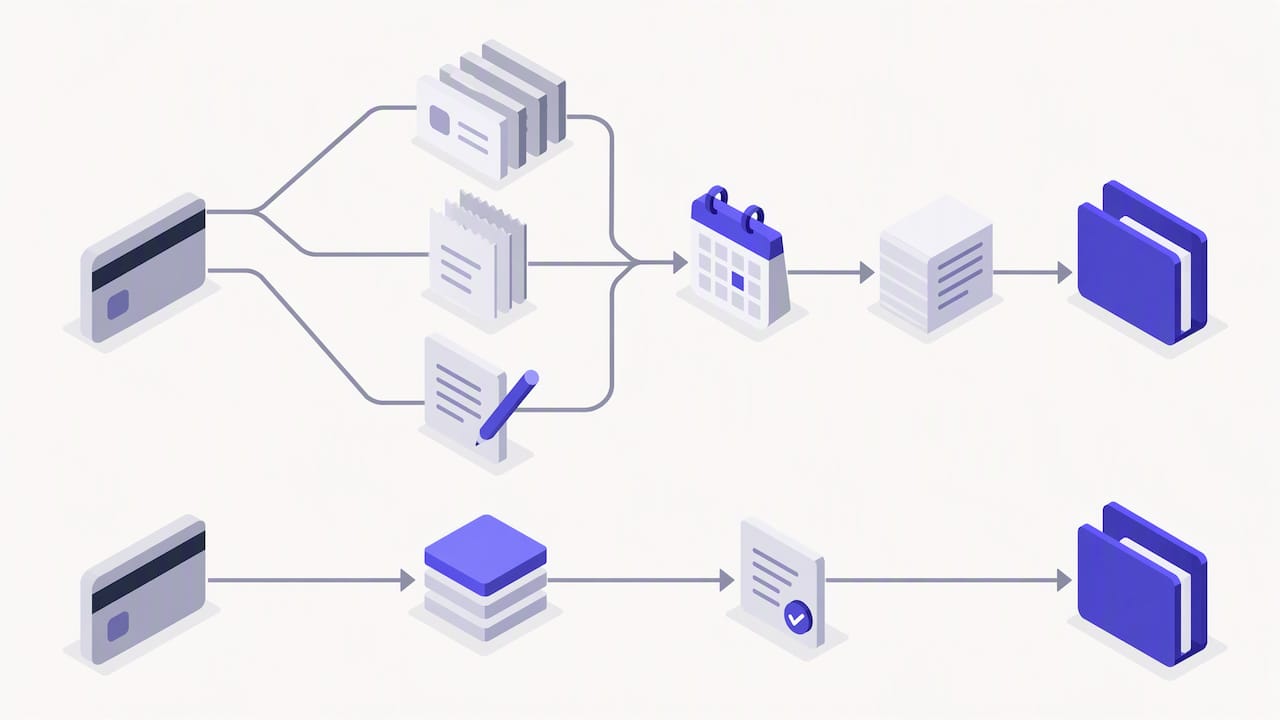
External costs add another layer. Many merchants now pay for third-party dispute management vendors, automated evidence submission tools, or representment specialists to handle cases they lack the staff to manage internally. Mastercard’s 2025 chargebacks report found that a large majority of organizations, 79%, now rely on third-party services for some part of their chargeback workflow, which reflects how widely merchants have concluded that specialized tools beat manual handling at scale.
Industry variance compounds both factors. Subscription and recurring-billing businesses tend to see lower per-dispute amounts but higher dispute frequency, often tied to forgotten renewals or confusing billing descriptors, while travel and high-risk categories see fewer disputes carrying larger dollar amounts and more complex evidence requirements. Knowing which pattern describes your business should shape where you invest first: automation and clearer billing communication for high-frequency, low-value disputes, or stronger documentation and representment support for high-value, low-frequency ones.
The most cost-effective fix for chargebacks is never fighting them, it is stopping them before they start. A handful of operational changes consistently move the needle.
Visa’s own guidance notes that friendly fraud, disputes filed by a cardholder who made the purchase but disputes it anyway, is rising, and recommends classifying dispute reasons by root cause rather than treating every chargeback the same. A merchant whose disputes cluster around a confusing descriptor needs a different fix than one whose disputes cluster around subscription cancellations.
Pro Tip: Pull your dispute reason codes monthly and sort them by cause, not just by volume: a spike in “product not received” disputes points to shipping communication, while a spike in “subscription canceled” disputes points to your cancellation flow.
Tracking your dispute metrics is not just an internal exercise. Visa’s acquirer monitoring program (VAMP) calculates a ratio combining fraud and disputes against your settled transaction volume, and acquirers are required to proactively manage merchants whose portfolios push that ratio above standard thresholds. A merchant sitting inside an acquirer’s underperforming portfolio can face enumeration and mitigation steps even if their individual numbers seem manageable in isolation, which makes consistent prevention work a shared interest between you and your acquirer, not just a cost center on your side.
When a chargeback notice lands, your response window is short and the quality of your evidence determines whether representment is worth pursuing at all.
This last point deserves emphasis because it is where many merchants overspend. Representment makes sense when evidence is strong and the transaction value justifies the labor. It rarely makes sense to spend an hour of staff time contesting a $15 dispute with thin documentation. A practical playbook on disputes from realclient.io walks through this same cost-benefit filter in more detail for merchants building out their own response criteria.
Chargeback management is an important part of the services we provide to merchants who process high volumes or operate in dispute-prone categories. Through ChargebackZ3N, we combine underwriting placement with dedicated dispute representment and prevention tooling, so merchants are not managing alerts, evidence, and deadlines with a spreadsheet and a prayer.
We have documented how subscription merchants cut chargebacks below 1% by combining clearer billing descriptors, proactive renewal communication, and real-time dispute alerts, the same prevention principles outlined above, applied systematically rather than reactively. That case reflects what consistent execution of these fundamentals can produce for a recurring-billing business.
Small merchants get the most value from automation: clear descriptors, cancellation flows, and alert rules cost little and catch most preventable disputes. Larger merchants with complex evidence requirements benefit more from a specialized team that knows which reason codes are worth fighting and which to write off. Spending equally on both regardless of size wastes money either way.
— Joshua Benedetti
If chargeback fees are impacting revenue faster than a team can respond, our services are designed to help close that gap rather than just provide additional reporting.
If you want a direct look at how this works for your volume and category, visit our chargeback management and dispute prevention page to get started.
Outcomes depend heavily on the quality of evidence a merchant submits, and cases with strong documentation such as delivery proof and clear communication records tend to favor the merchant. Weak or missing evidence typically results in the cardholder keeping the credit, which is why evidence quality matters more than the dispute reason itself.
Yes, beyond the disputed amount, each chargeback carries a processor fee plus internal labor costs, averaging $128 all-in per dispute. A pattern of chargebacks can also push a merchant’s dispute ratio above acquirer thresholds, risking higher fees or account review under programs like Visa’s VAMP.
Merchants bear the direct cost through the processor fee, the lost merchandise or service, and the staff time spent responding, which together average $128 per dispute. Issuing banks also absorb processing costs on their side, estimated at roughly $9 to $10 per dispute, which is part of why both sides have an interest in prevention.
Many merchants now rely on third-party tools or representment specialists rather than handling disputes manually, with 79% of organizations using some form of third-party dispute service. Whether to contest a specific case usually comes down to whether the transaction value justifies the time and cost of building a representment case.
Every merchant's processing setup is different, so the right answer depends on your industry, sales channels, average ticket size and chargeback history. CARDZ3N's payments specialists review those details with you and match your business with the right sponsor bank, gateway and risk tools, whether you sell online, in store, by invoice or on a recurring subscription.
We work with merchants across the USA, Canada, the UK and the EU, including high-risk, B2B and fast-growing businesses that traditional processors often turn away. If you would like a second opinion on your current rates, contract terms or approval options, contact our team for a free, no-obligation processing review.
Joshua Benedetti is the CEO of CARDZ3N, a Las Vegas-based merchant services provider specializing in high-risk payment processing and B2B payment technology.
Joshua Benedetti on LinkedInCARDZ3N Inc is headquartered in Las Vegas, Nevada, and provides merchant services to businesses that traditional processors turn away. Backed by top-tier sponsor banks and processors, CARDZ3N combines institutional stability with the speed of a specialized team that understands high-risk industries. Services include high-risk account underwriting and placement, gateway solutions across the major gateway platforms, POS integrations, ACH and check processing, chargeback prevention through ChargebackZ3N, and business lending and working capital. Its AerospacePay division serves OEMs, MROs, FBOs, and repair stations with B2B and B2G payment processing. CARDZ3N serves merchants in the USA, Canada, the UK, and the EU.
Start protecting your revenue from chargebacks today — schedule your complimentary consultation with CARDZ3N’s dispute management specialists.