
 CARDZ3N — Home
Contact us today for personalized advice and strategic solutions tailored to your goals.

Call us
+1 (702)-623-3528




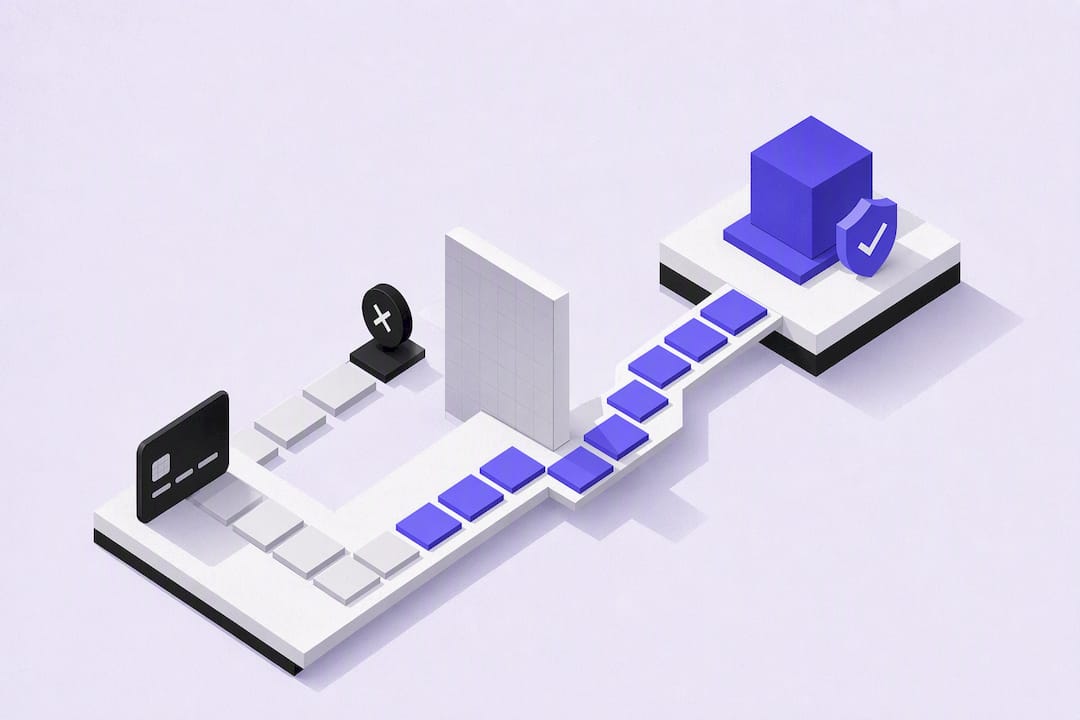





The fastest way to recover failed payments after a processor shutdown is to preserve every piece of termination evidence immediately, then request the written reason, reserve basis, payout schedule, and appeal process in writing. Recovery after that depends on transparent underwriting and placement with a specialist acquirer, not on evasive workarounds. Skip either step and you lose leverage before you even start.
The first 72 hours after a termination notice determine how much of your money you actually see again. Processors close accounts fast and revoke dashboard access faster, which means the evidence you need for underwriting and appeals can vanish within days.
Here’s the sequence that protects your position:
Preserving this material fast matters because Visa’s Merchant Screening Service documents termination reasons that acquirers can search for up to five years, and the story you can tell later depends entirely on what you saved this week.
Pro Tip: Export everything to PDF and store it in a folder named for the processor and shutdown date. Underwriters move faster when your evidence arrives organized instead of as a scattered email chain.
A new acquirer isn’t evaluating whether you made a mistake. They’re evaluating whether you fixed it and can prove it. That distinction shapes everything you put in the file.
Visa’s acceptance-risk standards call for documented dispute-management processes, staff training, and merchant education, not general assurances that “it won’t happen again.” An underwriter reading your file wants to see institutionalized controls, dated and assigned to an owner.
Build the packet around these components:
A useful proof point here isn’t a percentage you invent. It’s a trend line: show chargeback counts falling month over month after each corrective action, with the owner’s name and the date next to each fix.
Placement with a specialist acquirer isn’t a single application. It’s a matching process across sponsor banks, each with different risk appetites for your specific category, whether that’s nutraceuticals, subscription billing, or B2G contracting.
A specialist partner typically routes your file to more than one bank simultaneously rather than betting everything on one underwriter’s answer. That multi-bank approach exists because a decline from one sponsor bank says nothing about how another will view the same file. CARDZ3N’s high-risk merchant account placement works this way, pairing your remediation file with the banks most likely to approve your specific industry and volume profile.
Before you route a single transaction through a new account, insist on written terms covering:
Specialist partners require full transparency because they carry the underwriting risk with the sponsor bank. Bring your remediation file, transaction history, and entity documentation to the first conversation rather than waiting to be asked.
Pro Tip: Ask any potential partner how they handle gateway routing if one bank relationship underperforms. A partner who can shift you to a second rail without a full reapplication is worth more than one offering a marginally lower rate.
Some responses to a shutdown feel efficient in the moment and cost far more later. The tactics below don’t just fail. They create legal exposure that follows the business owner personally.
FTC enforcement actions have targeted processors and merchants for exactly these behaviors, and the consequence is rarely just another shutdown. It can mean contempt proceedings and personal liability. Full disclosure paired with a documented corrective plan is the only version of remediation that survives scrutiny.
There’s no universal number here, and any guide promising one is guessing. Reserve percentages, release triggers, and approval timelines depend on your risk category, processing history, and the sponsor bank’s own contract terms.
What does move the needle in your favor: dated remediation evidence, documented SOPs, and training records that show controls existed before the underwriter asked for them. Visa’s Acquirer Monitoring Program thresholds explain why acquirers scrutinize dispute ratios so closely, and a file that already addresses those ratios moves through review faster than one that reacts to them after the fact.
Before moving volume, demand in writing:
The recoveries that go well share one habit: the merchant treated evidence collection as urgent, not administrative. The ones that stall almost always lost the termination email, the ledger, or the support thread before they thought to save it.
Documented remediation with dates and named owners beats a well-written appeal letter every time. And knowing when to stop handling this alone matters as much as the paperwork itself. If you’re assembling a file for a second or third bank on your own, that’s usually the signal to bring in a specialist.
— Joshua Benedetti
CARDZ3N exists for exactly this situation: merchants Stripe, PayPal, or Square have already rejected or shut down, with no interest in generic reapplication advice. The advantage isn’t just approval odds. It’s transparency most high-risk processors won’t give you, with reserve structures and pricing quoted upfront instead of buried in fine print after you’ve already signed.
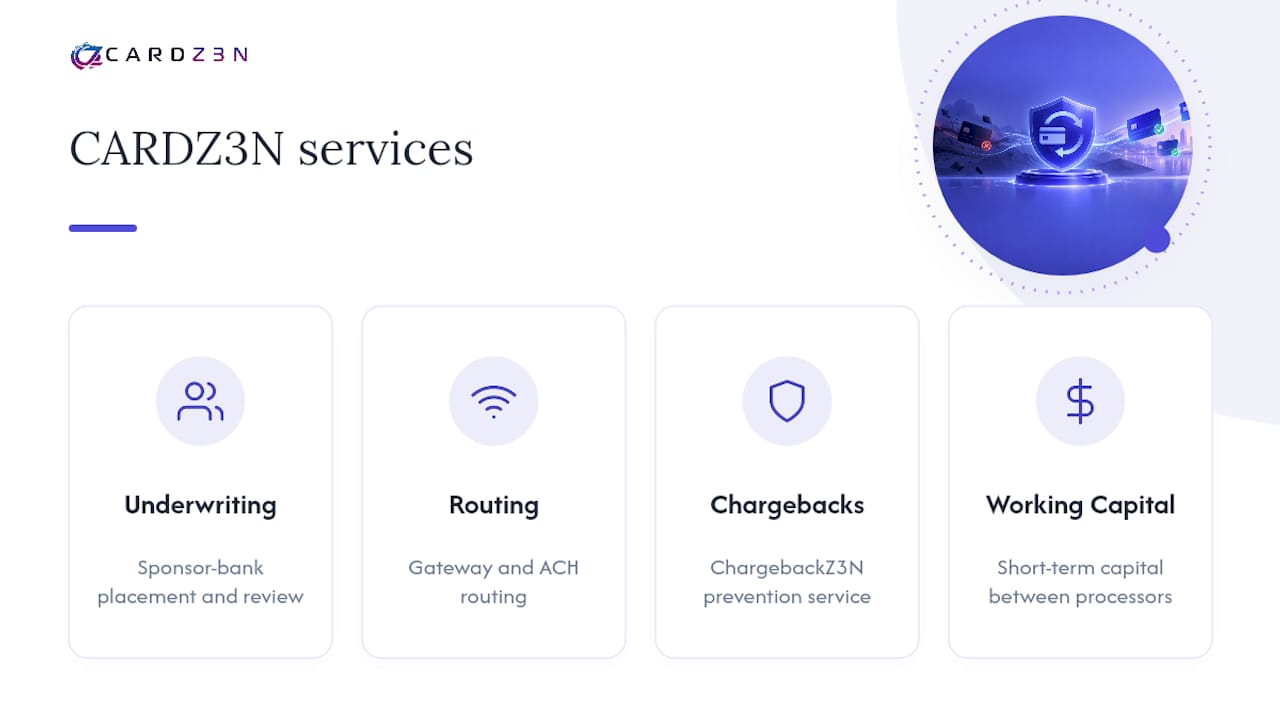
Backed by top-tier sponsor banks, CARDZ3N handles underwriting and merchant account placement, gateway and ACH routing, chargeback prevention through ChargebackZ3N, and working capital if cash flow is tight while you’re between processors. Before you reach out, have your termination notice, transaction ledger, and remediation documentation ready. That’s what lets an underwriting review move quickly instead of stalling on missing paperwork.
Start the conversation at Cardz3n and get a specific read on your file rather than a generic checklist.
There’s no fixed timeline; it depends on your reserve terms, dispute history, and how complete your remediation file is when you approach a new acquirer. Dated evidence and documented SOPs tend to shorten review, according to Visa’s acceptance-risk standards.
Yes, but disclosure is mandatory. Acquirers search the Visa Merchant Screening Service database, so hiding a prior termination only adds a fraud finding on top of the original issue.
Bring the termination notice, transaction ledger reconciled across card and ACH rails, refund and fulfillment records, and any dispute-management SOPs you’ve implemented. CARDZ3N’s high-risk merchant account placement team reviews this same evidence set during intake.
No. Splitting volume to stay under monitoring thresholds is a tactic the FTC has pursued enforcement action against, and it typically triggers deeper scrutiny rather than avoiding it.
No. A replacement account restores your ability to accept payments going forward, but funds withheld in reserve under the old processor’s contract are a separate claim you pursue directly with that processor under its contract terms.
Every merchant's processing setup is different, so the right answer depends on your industry, sales channels, average ticket size and chargeback history. CARDZ3N's payments specialists review those details with you and match your business with the right sponsor bank, gateway and risk tools, whether you sell online, in store, by invoice or on a recurring subscription.
We work with merchants across the USA, Canada, the UK and the EU, including high-risk, B2B and fast-growing businesses that traditional processors often turn away. If you would like a second opinion on your current rates, contract terms or approval options, contact our team for a free, no-obligation processing review.
Joshua Benedetti is the CEO of CARDZ3N, a Las Vegas-based merchant services provider specializing in high-risk payment processing and B2B payment technology.
Joshua Benedetti on LinkedInCARDZ3N Inc is headquartered in Las Vegas, Nevada, and provides merchant services to businesses that traditional processors turn away. Backed by top-tier sponsor banks and processors, CARDZ3N combines institutional stability with the speed of a specialized team that understands high-risk industries. Services include high-risk account underwriting and placement, gateway solutions across the major gateway platforms, POS integrations, ACH and check processing, chargeback prevention through ChargebackZ3N, and business lending and working capital. Its AerospacePay division serves OEMs, MROs, FBOs, and repair stations with B2B and B2G payment processing. CARDZ3N serves merchants in the USA, Canada, the UK, and the EU.
Start protecting your revenue from chargebacks today — schedule your complimentary consultation with CARDZ3N’s dispute management specialists.