 CARDZ3N — Home
Contact us today for personalized advice and strategic solutions tailored to your goals.

Call us
+1 (702)-623-3528


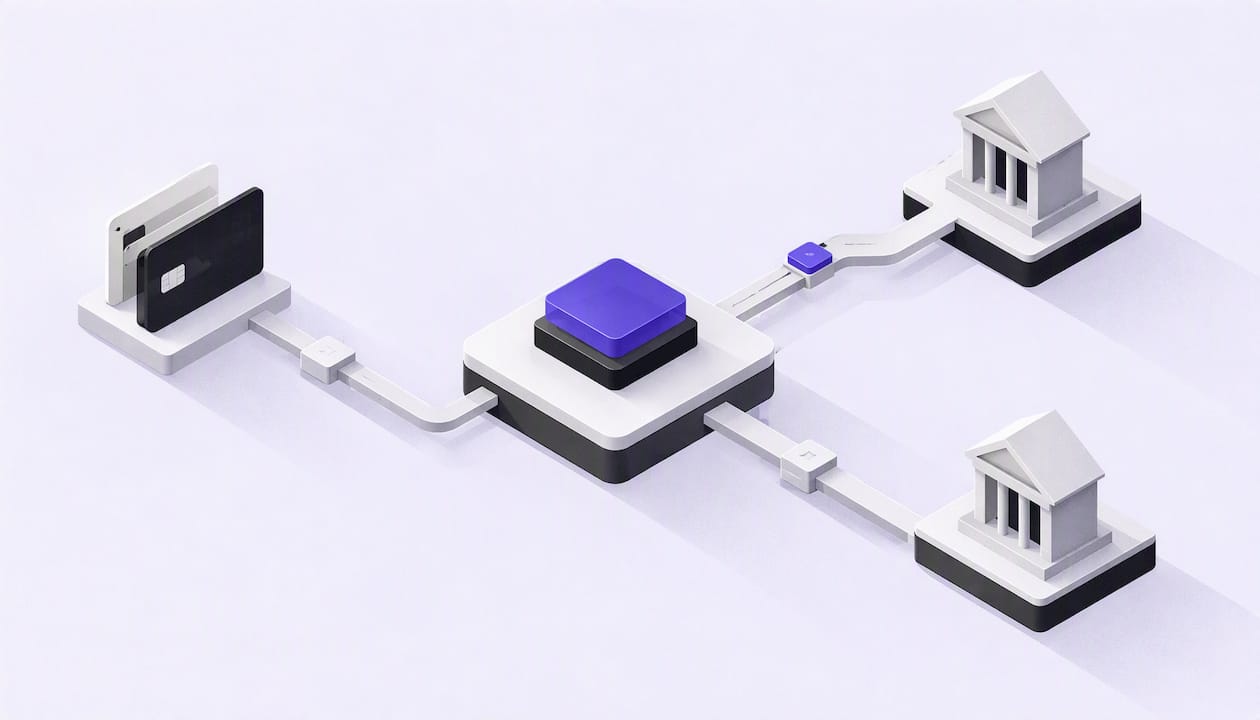




Multi-acquirer payment processing means your business holds merchant relationships with two or more acquiring banks and routes card transactions between them, either as a backup when one path fails or as a rule-based choice for each payment. The goal is continuity and a higher share of approved transactions. The price is more contracts, more reconciliation and more compliance surface. This guide covers how the model works, where it helps, where it only adds complexity, and how to measure whether it is paying off.
The FDIC’s examination manual defines an acquiring bank (also called a merchant bank or acquirer) as a bank that contracts with, or acquires, merchants: it signs them up to accept payment cards and arranges processing services. The same manual lists what merchant processing covers: gathering sales information, obtaining authorization, collecting funds from the issuing bank, reimbursing the merchant and handling chargebacks.
In the standard U.S. flow, transaction data travels from the merchant to the acquiring bank, through the card network, to the issuing bank for authorization. After capture, funds move back the other way: issuer, network, acquirer, merchant. In a single-acquirer setup, every one of those payments depends on one bank relationship, one underwriting decision and one technical connection.
That is the exposure multi-acquiring addresses. The acquirer is the entity that holds your merchant account and your risk profile. If it declines a transaction it would not normally decline, suspends your account, or simply goes offline, you have no second path.
Three terms get blurred in this conversation:
The distinction matters because “multi-acquirer” is not the same as “multiple gateways” or “multiple processors” feeding one bank. If two processors both settle through the same sponsor bank, a bank-level problem still hits both. For a deeper walk through these layers, see our breakdown of gateway versus processor, underwriting and PCI.
There are three common patterns. Most merchants end up using a mix.
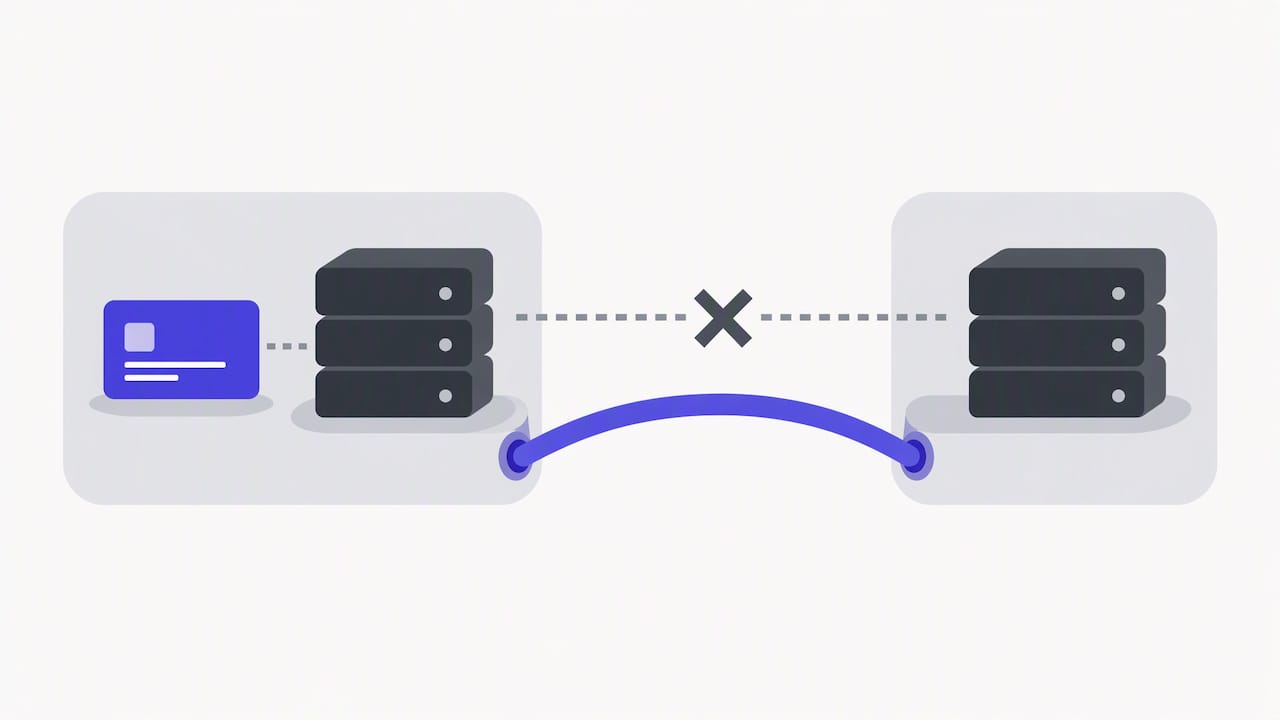
A primary acquirer handles everything. If it times out, returns a technical error or goes down, the transaction is resent through a secondary acquirer. This is the simplest design and the one most merchants start with. It protects uptime but does little for approval rates on ordinary issuer declines.
Transactions are split by rules: card brand, card type, issuing country, currency, ticket size or product line. A domestic debit transaction might go to the acquirer with the best debit pricing, while cross-border payments go to an acquirer with a local presence. Glenbrook Partners describes the value of routing between providers as optionality, performance benchmarking and outage redundancy, with transaction-level optimization that can reduce declined and failed payments.
When an issuer declines for a soft reason, the same payment is retried through a different acquirer. Whether this helps depends on the decline code, on whether the data sent is identical, and on how the card network rules treat retries. Retries on hard declines (stolen card, closed account) waste fees and can raise your decline ratio, so the logic needs to differentiate.
| Pattern | Main benefit | Main limit | Best fit |
|---|---|---|---|
| Failover | Uptime when an acquirer or link fails | No help with issuer-side declines | Merchants where an outage costs more than a bad week of approvals |
| Rule-based routing | Cost and approval optimization by segment | Needs data, testing and ongoing tuning | Higher volume, mixed card types or geographies |
| Retry/cascade | Recovers soft declines | Fee drag and retry rules to manage | Subscriptions and high-ticket sales |
There are two separate benefits, and they should not be confused.
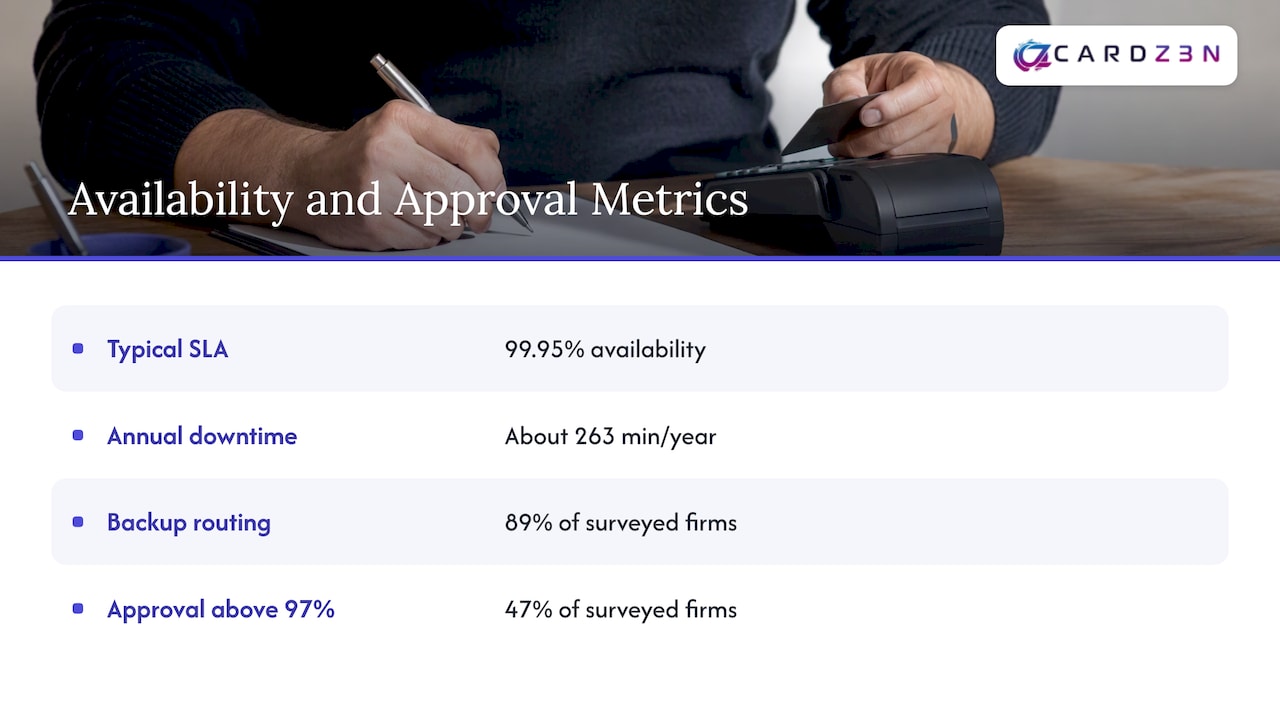
Availability. The Paypers reported in 2022 that acquirer service-level agreements commonly provide 99.95% availability, equal to about 263 minutes of unavailability a year, so merchants needing more resilience than that may need more than one acquirer. Four and a half hours a year sounds small until you picture it landing on a peak sales day, or on the morning a subscription billing run executes.
Approval performance. Here the evidence is more nuanced. A PYMNTS Intelligence and Spreedly report surveyed 110 U.S. companies with annual revenue of $10 million or more and found that 89% had failover or backup routing, but only 47% achieved approval rates above 97%. The lesson: a backup path is common, and on its own it does not deliver top-tier authorization performance. The same report suggests that partial orchestration can add complexity without improving results, and names token control, PSP onboarding speed and new payment-rail integration as barriers.
Glenbrook makes a similar point from the practitioner side: the value of orchestration comes from combining routing, provider optionality, transaction optimization and integration simplification, not from treating failover alone as the whole solution.
If your card data is tokenized by one acquirer or processor in a format only that provider can use, you cannot send those stored credentials to a second acquirer without migration. The Oliver Wyman and MAG 2023 Voice of the Merchant study discusses how tokenization affects routability, portability between acquirers and authorization rates. For subscription and recurring businesses, where stored credentials drive revenue, this is often the first technical question to settle, before any routing rule is written.
Multi-acquiring is not free resilience. Expect these:
The Kansas City Fed’s briefing on merchant acquiring explains that acquirers are responsible for ensuring network requirements and PCI compliance. Noncompliance can bring network fines, higher per-transaction fees or termination of card acceptance, and the liability is typically shifted to merchants by contract. Banks are expected to monitor and enforce PCI compliance for the merchants and service providers they partner with. With two acquirers, you answer to two compliance programs. A single, well-documented PCI posture helps; our PCI compliance checklist for B2B merchants covers the controls to have in order first.
Underwriting is the other half. Each bank forms its own view of your chargeback history, product category, processing volume and reserve needs. A business that is declined or limited by one bank may be a perfectly acceptable risk to another, which is the logic behind multi-bank placement for high-risk merchant accounts.
The Oliver Wyman and MAG study found that half of merchants opted for multi-acquirer setups to address cost and outages without resiliency. That is a useful frame: are cost and outages real pain points for you? Work through these questions.
Our companion piece on when a second acquirer pays off goes deeper on the economics.
Set a baseline before you add the second path, then track the same metrics for at least a few full billing cycles.
A useful test: if you cannot name which metric you expect to improve and by roughly how much, you are not ready to add a second acquirer. You are ready to define the metric.
We see multi-acquiring most often among merchants who learned the hard way that one bank relationship can disappear. A merchant gets frozen, reserves jump, or an account is closed over a chargeback spike, and a business with healthy demand loses the ability to take cards overnight. That is why we built our model around multi-bank and multi-rail approval resilience, backed by sponsor banks, rather than around a single pipe.
Our view is that resilience comes first and optimization second. Get a second approved path in place, documented and tested, before you try to squeeze basis points out of routing rules. Many merchants invert this: they buy sophisticated routing logic while still depending on one bank’s underwriting decision.
We also think the operational cost is underpriced in most sales pitches. Two acquirers mean two reserve structures, two sets of fees and two sets of rules. That is why we are transparent about reserve terms and quote-based pricing: you cannot judge whether a second path pays off if one of the paths hides its terms. Ask every acquirer you evaluate what the reserve is, how long it is held and what triggers a change.
Last, hands-on underwriting support matters more than any routing feature. A clean application, a clear explanation of your business model and a documented dispute process are what get a second acquirer to say yes.
— Joshua Benedetti
If one bank has already limited, frozen or declined your business, or your category is one mainstream providers avoid, a second path starts with underwriting. CARDZ3N places merchants with sponsor banks, supports the application and integrates gateways and chargeback tools around it. Start with our high-risk merchant account page, or see online payment processing if your volume is ecommerce. Pricing is quote-based, so the first step is a conversation about your volume and risk profile.
Not necessarily. A processor handles the data flow, while the acquirer is the bank that holds your merchant account and settles funds. Two processors that both connect to the same acquiring bank give you software redundancy but not bank-level redundancy.
No. A backup path protects against outages and some acquirer-specific declines, but it does not override issuer decisions. The PYMNTS and Spreedly report found most companies with backup routing still fell short of a 97% approval rate, so results depend on routing quality, data and tokens.
Possibly. You may lose pooled volume leverage and add orchestration or gateway fees, and you will spend more time on reconciliation. Savings come from routing transactions to the cheaper or better-approving path, so compare the effective rate for each path over several months.
No, but the case is strongest where downtime is costly, an account is at risk of termination, or card mix and geography vary. A smaller merchant with a fragile account may benefit from a second approved path sooner than a larger one with a stable single bank.
Every merchant's processing setup is different, so the right answer depends on your industry, sales channels, average ticket size and chargeback history. CARDZ3N's payments specialists review those details with you and match your business with the right sponsor bank, gateway and risk tools, whether you sell online, in store, by invoice or on a recurring subscription.
We work with merchants across the USA, Canada, the UK and the EU, including high-risk, B2B and fast-growing businesses that traditional processors often turn away. If you would like a second opinion on your current rates, contract terms or approval options, contact our team for a free, no-obligation processing review.
Joshua Benedetti is the CEO of CARDZ3N, a Las Vegas-based merchant services provider specializing in high-risk payment processing and B2B payment technology.
Joshua Benedetti on LinkedInCARDZ3N Inc is headquartered in Las Vegas, Nevada, and provides merchant services to businesses that traditional processors turn away. Backed by top-tier sponsor banks and processors, CARDZ3N combines institutional stability with the speed of a specialized team that understands high-risk industries. Services include high-risk account underwriting and placement, gateway solutions across the major gateway platforms, POS integrations, ACH and check processing, chargeback prevention through ChargebackZ3N, and business lending and working capital. Its AerospacePay division serves OEMs, MROs, FBOs, and repair stations with B2B and B2G payment processing. CARDZ3N serves merchants in the USA, Canada, the UK, and the EU.
Start protecting your revenue from chargebacks today — schedule your complimentary consultation with CARDZ3N’s dispute management specialists.