
 CARDZ3N — Home
Contact us today for personalized advice and strategic solutions tailored to your goals.

Call us
+1 (702)-623-3528










Today's consumer relies heavily on credit cards for purchases. Business owners know they need to accept credit card payments, or they risk losing customers. Cash is no longer king – especially with the rise in online sales over the last couple of years, driven in part by the COVID-19 pandemic.
Consult this guide for research tips along the way, and reach out to us at CARDZ3N. We will complete a free review of your business's current performance and identify areas of improvement as part of our Merchant Services.
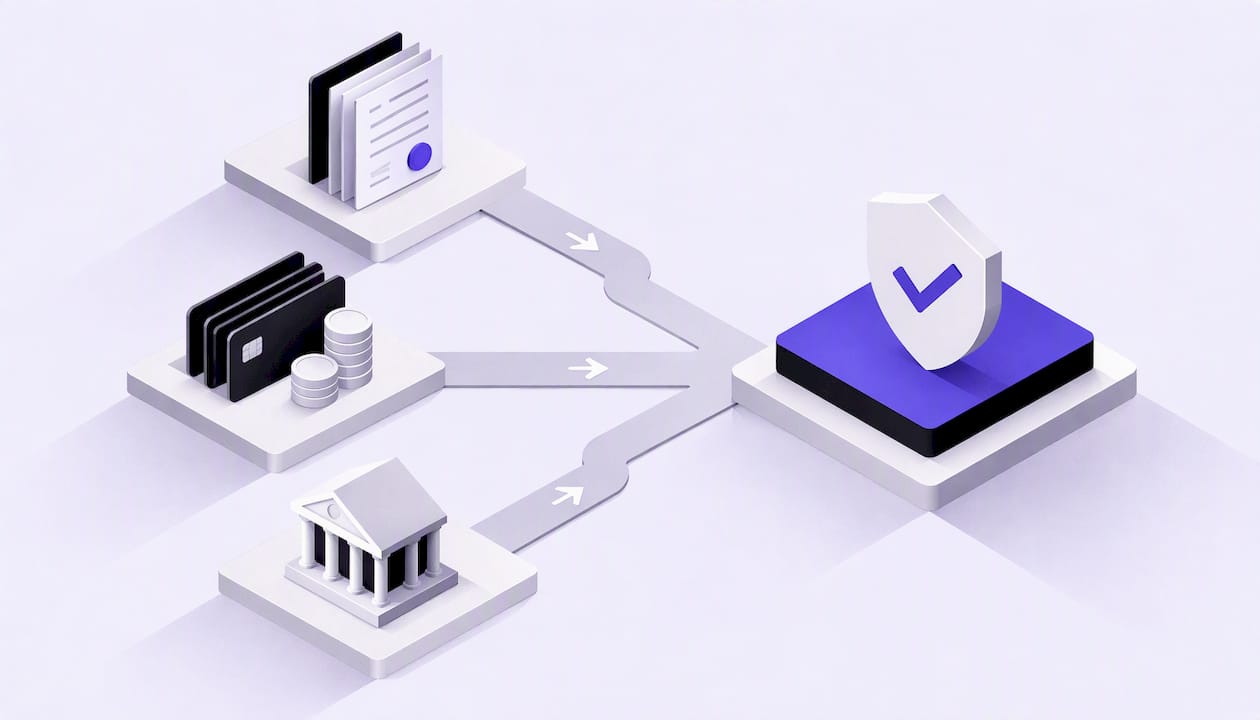
Before diving in, it helps to understand credit card processing and the technical process behind how businesses accept customer payments. A processing company connects the multiple services required to complete a credit card transaction: credit card networks, issuing banks, a payment gateway, and the merchant payment processing account or bank. These are the "key players" in credit card processing.
The processing company enables the secure transfer of the customer's data between these services, namely the issuing bank and the merchant account. The transaction has two basic steps – authorization and settlement.
The credit card processor connects with the customer's issuing bank to verify their card details and purchase amount. This happens quickly and results in the customer's card being approved or denied for the transaction.
Choosing the right processing company is not a one-size-fits-all decision, since different merchants have different needs. Credit card processing companies also use different fee structures, such as charging per transaction or a flat rate.
Credit card processing matters because many customers only use credit for shopping. Customers may want to take advantage of credit cards that offer rewards, cash back, and loyalty programs. They miss out on these bonuses if they use cash, checks, or debit cards instead.
Younger consumers rarely carry cash, since so many merchants accept credit cards. It is rare today to find a cash-only business, because it inconveniences the customer. These friction points are an easy way to lose customers you worked hard to earn.
When choosing a credit card processor, functionality and customer support are critical factors in your decision. Ask yourself these questions to narrow down the best option:
This matters because processing companies may charge a per-transaction fee. If the company has a high number of sales, a per-transaction fee can be a good way to cut costs on the overall volume of transactions.
However, that can become costly if the business has less than $10,000 in sales per month. Smaller businesses will want to look at a company that offers a flat rate instead.
Businesses with multiple physical locations will need equipment or registers where customers can scan or tap their card to send payment information. A business that moves around, like a food truck, will need portable equipment.
In an online environment, the customer types in the card information by hand, so online sales require a secure payment gateway. If the business operates both in person and online, it will need a solution that can handle both in one integrated system.
If the business sells internationally, it will need a credit card processing partner that supports exchange rates and international cards.
Some vendors will not work with restricted items. If a business sells a product considered restricted in some states, it may need to look to a traditional merchant services vendor instead. Popular credit card processing companies often keep a list of approved (or unapproved) items, which can rule out working with certain controversial companies.
A vendor may also consider an account "high-risk." This means the business carries a higher risk of fraud, returns, or chargebacks based on its products and services.
Since the payment processor takes on more risk, it will often charge higher transaction fees to make up for it.
A business can be labeled high-risk for several reasons – for example, processors weigh whether you accept international payments or even your credit score in their decision. Some processors also consider specific industries high-risk, so plan accordingly.
Most providers offer 24/7 service for critical events such as network outages, but some limit support at their lower-cost plans. With this information, you can narrow down your options for credit card processing services.
The cost depends on which processing companies you are considering. There are two basic pricing types: fee-per-transaction and flat-rate.
In addition to credit card processing costs, remember to factor in equipment costs and the secure payment gateway. Depending on how the company operates, these costs will factor into the overall price of the service.
If a fee-per-transaction partner is the right fit, you may see different fees depending on their pricing model. These fees come from several different players. Simply put, there are two main types of fees: wholesale and markup. Not all merchant fees apply at the transaction level – there are also costs to maintain a merchant account yearly or monthly.
At the transaction level, processing fees can come from banks, credit card associations, or payment processors. No matter the source, the payment processor collects the fee and passes it along to the bank or credit card association. These fees are not negotiable.
While some fees cannot be negotiated, as noted above, others can. Here are several ways to reduce your costs:
Start by evaluating your business's needs to determine what type of credit card processor is right for your company. From there, narrow your search to specific vendors that meet the criteria that will help your business flourish and grow.
If you get stuck, do not spin your wheels – contact us at CARDZ3N. We are happy to complete a free review of your business's current performance and areas for improvement. We are here to help you.
Every merchant's processing setup is different, so the right answer depends on your industry, sales channels, average ticket size and chargeback history. CARDZ3N's payments specialists review those details with you and match your business with the right sponsor bank, gateway and risk tools, whether you sell online, in store, by invoice or on a recurring subscription.
We work with merchants across the USA, Canada, the UK and the EU, including high-risk, B2B and fast-growing businesses that traditional processors often turn away. If you would like a second opinion on your current rates, contract terms or approval options, contact our team for a free, no-obligation processing review.
Joshua Benedetti is the CEO of CARDZ3N, a Las Vegas-based merchant services provider specializing in high-risk payment processing and B2B payment technology.
Joshua Benedetti on LinkedInCARDZ3N Inc is headquartered in Las Vegas, Nevada, and provides merchant services to businesses that traditional processors turn away. Backed by top-tier sponsor banks and processors, CARDZ3N combines institutional stability with the speed of a specialized team that understands high-risk industries. Services include high-risk account underwriting and placement, gateway solutions across the major gateway platforms, POS integrations, ACH and check processing, chargeback prevention through ChargebackZ3N, and business lending and working capital. Its AerospacePay division serves OEMs, MROs, FBOs, and repair stations with B2B and B2G payment processing. CARDZ3N serves merchants in the USA, Canada, the UK, and the EU.
Start protecting your revenue from chargebacks today — schedule your complimentary consultation with CARDZ3N’s dispute management specialists.