


 CARDZ3N — Home
Contact us today for personalized advice and strategic solutions tailored to your goals.

Call us
+1 (702)-623-3528




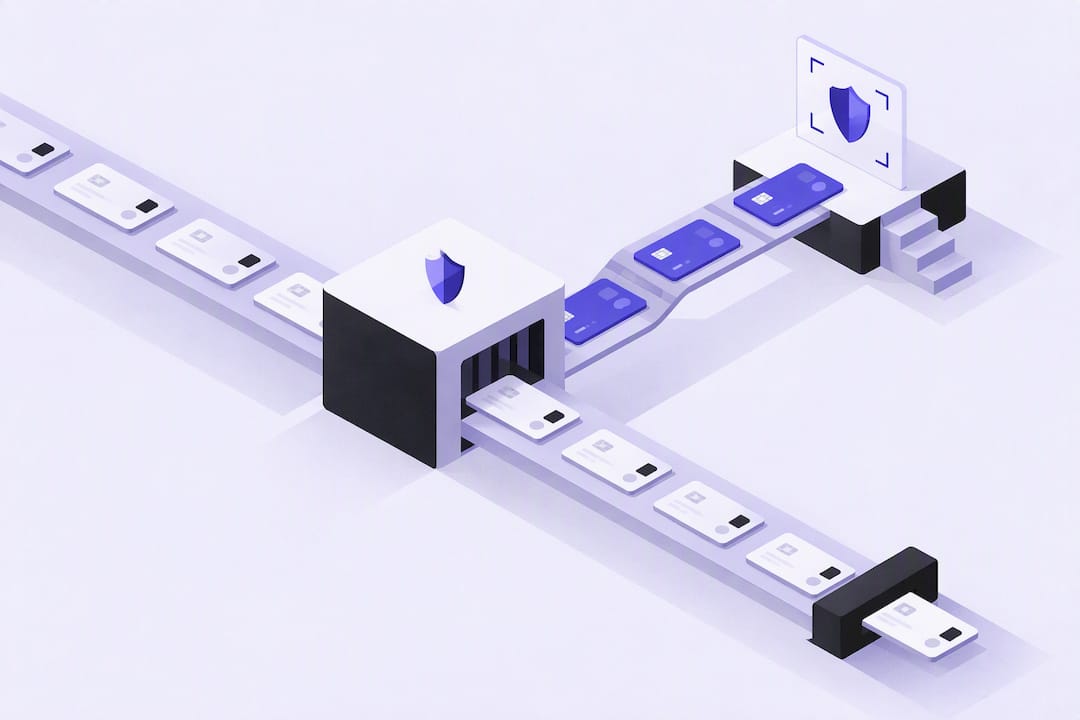





3D Secure 2 (3DS2) is the EMV authentication protocol that lets issuers make real-time risk decisions using far richer transaction data, so most transactions clear without a challenge. When full authentication succeeds, it can shift fraud liability away from the merchant. The EMV 3-D Secure standard governs the flow, card networks enforce their own program rules on top of it, and specialists help merchants configure it correctly. In the United States, adoption remains optional rather than mandated.
3DS1 relied on a thin data set and a browser redirect that frequently broke on mobile devices, which is a large part of why cart abandonment at that authentication step ran high for years. 3DS2 replaces that redirect-heavy model with a data exchange that gives issuers far more context before they decide whether a challenge is even necessary.
The added data elements include the device channel (browser, app, or 3RI), device fingerprinting fields, shipping and billing address history, and prior transaction history with that cardholder. Each element lets the issuer’s risk engine evaluate something 3DS1 could not: whether this device has transacted with this merchant before, whether the shipping address matches past orders, and whether the transaction pattern looks like the cardholder’s normal behavior.
Native app and SDK support is the other major shift. Where 3DS1 forced merchants into a full-page redirect regardless of channel, 3DS2 supports:
Mobile merchants tend to see lower challenge rates specifically because SDK integrations pass more reliable device signals than a browser redirect ever could. The 3-D Secure Wikipedia entry documents this SDK and 3DS Method architecture as the mechanism that enables frictionless authentication in the first place, since the issuer’s ACS can render a risk decision from passive data alone rather than interrupting the checkout.
The 3DS2 flow runs through a defined sequence, and every merchant integration needs to account for each step:
Visa’s own materials describe this same packaging and decisioning sequence, and note that merchants who package their authentication request correctly give issuers access to roughly 10 times more data than a 3DS1 request carried, which is what makes frictionless decisioning possible at scale.
More data, fewer interruptions: Visa’s 3DS2 infographic confirms that the added data volume is what allows issuers to approve most low-risk transactions without a customer-facing challenge.
Three artifacts matter more than any other part of the exchange: the Electronic Commerce Indicator (ECI), the cryptogram (CAVV for Visa, AAV for Mastercard), and the full set of 3DS transaction IDs. These are what a network checks during a dispute to confirm authentication actually happened and actually applies to the liability shift.
On the integration side, engineers need to plan for the distinction between the 3DS Method (a passive, invisible call) and a true challenge (an interactive, rendered interface), along with the iframe sizing constraints the ACS expects, method and challenge timeout windows, and correct handling of the return_url that brings the cardholder back into the merchant’s checkout after a challenge completes. Getting any of these wrong tends to produce timeouts that fall back to a weaker authentication result, which is worse for both conversion and dispute defense.

The business case for 3DS2 comes down to a data trade rather than a blanket security upgrade. Because 3DS2 transmits roughly ten times more contextual data than 3DS1, issuers can approve the large majority of transactions frictionlessly, and typical challenge rates run under 5% of authenticated volume.
Frictionless is the default outcome, not the exception. Stripe’s own guidance on the frictionless flow confirms that richer signals let issuers approve low-risk transactions without interrupting the cardholder, which is the primary operational advantage over the old redirect model.
The upside runs in two directions for merchants:
The downside is real and merchants who force 3DS on every transaction regardless of risk profile often see it: unnecessary friction on low-risk orders raises abandonment, and a challenge that fails or times out can cost a sale that would have cleared without authentication. Given that online commerce volume keeps climbing, according to Statista’s tracking of online shopping trends, the cost of getting this trade-off wrong compounds at scale. The fix is selective triggering rather than blanket enforcement, which the implementation section below breaks down.
Liability shift is conditional, not automatic. It applies specifically to fraud-coded card-not-present disputes when authentication succeeds and the merchant supplies correct proof, according to GPayments’ explainer on US liability shift rules. It does not extend to disputes over product quality, non-receipt, or recurring billing complaints, since those are not fraud claims to begin with.
| Dispute type | Typically covered by liability shift | Why |
|---|---|---|
| Fraud-coded CNP (for example, Visa, Mastercard) | Yes, when authentication succeeded | Issuer authenticated the cardholder and accepted the risk |
| Product not received | No | Not a fraud claim; authentication does not address delivery |
| Not as described | No | Dispute concerns product quality, not cardholder identity |
| Recurring billing complaints | No | Typically a service or consent dispute, not fraud |
What networks actually check during representment is narrow but strict: the correct ECI value for the transaction type, a valid cryptogram (CAVV or AAV), and the complete 3DS trace IDs tying the authentication to the specific authorization. Missing or mismatched artifacts here are one of the most common reasons a merchant loses a dispute it should have won.
Two caveats deserve attention. An “attempted” authentication result, where the issuer was unreachable or opted not to authenticate, does not carry the same protection as a completed authentication, and merchants should not assume it does. Similarly, Data-Only flows, where 3DS data is sent for issuer risk scoring without a full authentication request, improve decisioning but provide no liability shift at all. Merchants who confuse Data-Only participation with genuine liability protection are exposed without realizing it. CARDZ3N’s chargeback management and dispute representment service is built around retaining exactly these artifacts so a fraud-coded dispute can be defended with complete evidence.
A reliable 3DS2 integration comes down to a handful of engineering decisions made correctly up front, since retrofitting them after a launch tends to be expensive.
Pro Tip: Monitor your “attempted” ECI rate separately from your challenge and frictionless rates; a spike there usually means an ACS or network issue, not a change in cardholder behavior.
Merchants running on Shopify who want to harden checkout further alongside their 3DS2 rollout can review complementary options in this roundup of security plugins.
High-risk merchants face a sharper version of the friction-versus-fraud trade-off, since chargeback ratios already draw scrutiny from acquirers and a heavy-handed 3DS policy can suppress legitimate volume that the business cannot afford to lose.
Coordination with your acquirer matters as much as the technical build. Confirm in writing which ECI values your acquirer accepts for liability shift purposes, document your fallback rules so underwriting has visibility into how declines are handled during an ACS outage, and preserve full authentication evidence for every disputed transaction. CARDZ3N’s high-risk merchant account guidance covers how this coordination fits into underwriting decisions for regulated and high-chargeback verticals.
Pro Tip: Roll out dynamic 3DS rules against a small percentage of live traffic first, and track conversion and chargeback rate side by side before expanding the rule set to full volume.
Underwriting for high-risk verticals starts with the chargeback ratio a business is carrying and the fraud pattern behind it, and 3DS2 configuration is one of the levers CARDZ3N evaluates alongside reserve structure and processing volume. Forcing full authentication on every transaction is rarely the right call for a subscription, nutraceutical, or CBD merchant whose customer base includes a high share of repeat buyers, since blanket challenges add friction without adding meaningful fraud protection on low-risk repeat orders.
Selective deployment tends to work better in practice:
CARDZ3N’s underwriting team works with merchants to set these thresholds based on the specific risk profile of their vertical and their processing history, then coordinates with the sponsor bank on which authentication artifacts the acquirer requires for representment. That coordination, paired with chargeback prevention through ChargebackZ3N, is what keeps a high-risk account both approved and defensible when a dispute arrives.
In my view, the merchants who get the most out of 3DS2 treat it as a targeting problem, not a blanket policy. The technology rewards precision: challenge the transactions that actually carry risk, and let the rest through frictionless. If your underwriting or integration questions go beyond what a checklist can answer, talk to a payments specialist before you roll out a rule set at scale.
— Joshua Benedetti
CARDZ3N works with merchants across regulated and high-chargeback verticals to configure authentication rules that protect against fraud without throttling legitimate sales. That includes underwriting and account placement, gateway integration support for payment gateways that carry the 3DS data correctly, and dispute defense through ChargebackZ3N when a fraud-coded dispute needs representment evidence. If your business has been declined or shut down by a mainstream processor, start with a merchant services review to see what a specialist-built account can do.
3D Secure 2 is an EMV authentication protocol that exchanges richer transaction and device data between merchants, networks, and card issuers than its predecessor did. That extra data lets issuers approve most low-risk transactions frictionlessly while reserving interactive challenges for transactions that genuinely need them.
Activation is generally handled by your card-issuing bank rather than by the merchant or the cardholder directly, since the issuer configures its Access Control Server to authenticate eligible cards automatically. Check with your card issuer for the specific steps, as processes vary by bank and are not publicly standardized.
Support for 3DS2 is a network and issuer-level capability rather than a specific card feature, and major card networks maintain their own program rules for participating issuers. Merchants generally cannot determine 3DS2 eligibility by card brand alone since it depends on whether the issuing bank has deployed a compatible ACS.
3D Secure V2, commonly written as 3DS2, is the current version of the EMV 3-D Secure standard, built to replace the older redirect-heavy 3DS1 flow. It adds native app and SDK support, transmits far more contextual data to issuers, and enables frictionless authentication for the large majority of transactions rather than defaulting every purchase to a challenge.
Every merchant's processing setup is different, so the right answer depends on your industry, sales channels, average ticket size and chargeback history. CARDZ3N's payments specialists review those details with you and match your business with the right sponsor bank, gateway and risk tools, whether you sell online, in store, by invoice or on a recurring subscription.
We work with merchants across the USA, Canada, the UK and the EU, including high-risk, B2B and fast-growing businesses that traditional processors often turn away. If you would like a second opinion on your current rates, contract terms or approval options, contact our team for a free, no-obligation processing review.
Joshua Benedetti is the CEO of CARDZ3N, a Las Vegas-based merchant services provider specializing in high-risk payment processing and B2B payment technology.
Joshua Benedetti on LinkedInCARDZ3N Inc is headquartered in Las Vegas, Nevada, and provides merchant services to businesses that traditional processors turn away. Backed by top-tier sponsor banks and processors, CARDZ3N combines institutional stability with the speed of a specialized team that understands high-risk industries. Services include high-risk account underwriting and placement, gateway solutions across the major gateway platforms, POS integrations, ACH and check processing, chargeback prevention through ChargebackZ3N, and business lending and working capital. Its AerospacePay division serves OEMs, MROs, FBOs, and repair stations with B2B and B2G payment processing. CARDZ3N serves merchants in the USA, Canada, the UK, and the EU.
Start protecting your revenue from chargebacks today — schedule your complimentary consultation with CARDZ3N’s dispute management specialists.